Defending Tribal Sovereignty: Protecting Indigenous Heritage and Stewardship in the Age of Energy Dominance
- National Wildlife Federation
- Jul 28, 2026
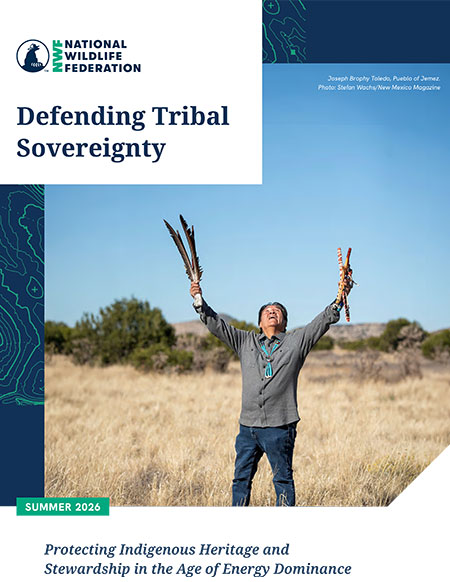
This report examines a series of administrative actions and policy shifts over the two Trump terms that threaten Tribal sovereignty and self-determination across the country. Tribal sovereignty is the inherent right of Tribal Nations to govern themselves, steward their lands and waters, maintain their cultures and traditions, and determine their own futures. Sovereignty predates the formation of the U.S. and is recognized through treaties, federal law, the federal trust responsibility, and longstanding government-to-government relationships between the U.S. government and Tribes. Despite these legal and political foundations, Tribal sovereignty remains under constant threat from administrative actions that diminish Tribal authority, limit Tribal participation in decision-making, and prioritize resource extraction over Indigenous stewardship and a relational understanding of natural resources and wildlife.
Together, the administration's actions represent a broader pattern eroding mechanisms that enable Tribal Nations to protect their lands, waters, wildlife, sacred and cultural places, and communities, and elevate their voices in decisions directly affecting them. Many of the threats identified in this report are rooted in an "energy dominance" approach to public lands and natural resource management that prioritizes rapid development, resource extraction, and deregulation. Under this framework, environmental review processes are weakened, public participation is curtailed, and Tribal consultation is treated as a check box rather than a vital component of responsible governance.
The report highlights a range of actions affecting Tribes, including efforts that weaken environmental protections, accelerate infrastructure and extractive projects, reduce meaningful consultation requirements, limit agency accountability, and roll back policies that support Tribal self-determination. These developments affect everything from clean water access and cultural resource protection to wildlife conservation, climate resilience, and Tribal cultural and economic development. When Tribes are excluded from decision-making, sacred and cultural sites are placed at risk, treaty-protected resources are threatened, and opportunities for collaborative stewardship are undermined.
These threats extend beyond Tribal communities. Tribes have long been conservation leaders. Indigenous Peoples steward some of the most biodiverse and ecologically important landscapes in the world, and Tribal stewardship practices have sustained lands, waters, wildlife, and ecosystems since time immemorial. Policies that undermine Tribal sovereignty often undermine conservation. Simultaneously, this report recognizes that Tribes are not passive recipients of federal policy. Across the country, Tribal governments, Indigenous organizations, and their allies across the public, nonprofit, and private sector continue to advance diverse approaches to conservation through advocacy, litigation, policy development, narrative shift work, and stewardship initiatives. These efforts demonstrate the resilience and leadership of Tribes in the face of ongoing challenges.
Understanding these policy implications is a critical first step toward supporting Tribal sovereignty and strengthening the trust relationships between the US and Tribes. Meaningful action is urgent and requires listening to Tribal communities and ensuring their priorities guide management decisions and conservation efforts. The future of Tribal sovereignty is inseparable from the future of conservation. Protecting Tribal sovereignty means upholding treaty obligations and the trust responsibility while recognizing the essential role that Tribes play in stewarding lands, waters, and wildlife for future generations. As the challenges outlined in this report continue to evolve, so must our collective commitment to ensuring Tribes have the authority and resources necessary to determine their own futures.
Defending Tribal Sovereignty: Protecting Indigenous Heritage and Stewardship in the Age of Energy Dominance