National Wildlife Refuges: A Haven for Animals and for Us
Natural places that have long supported animals and people, America’s National Wildlife Refuges need our help, says NWF President & CEO Collin O’Mara
- By Collin O’Mara
- NWF News
- Sep 24, 2025
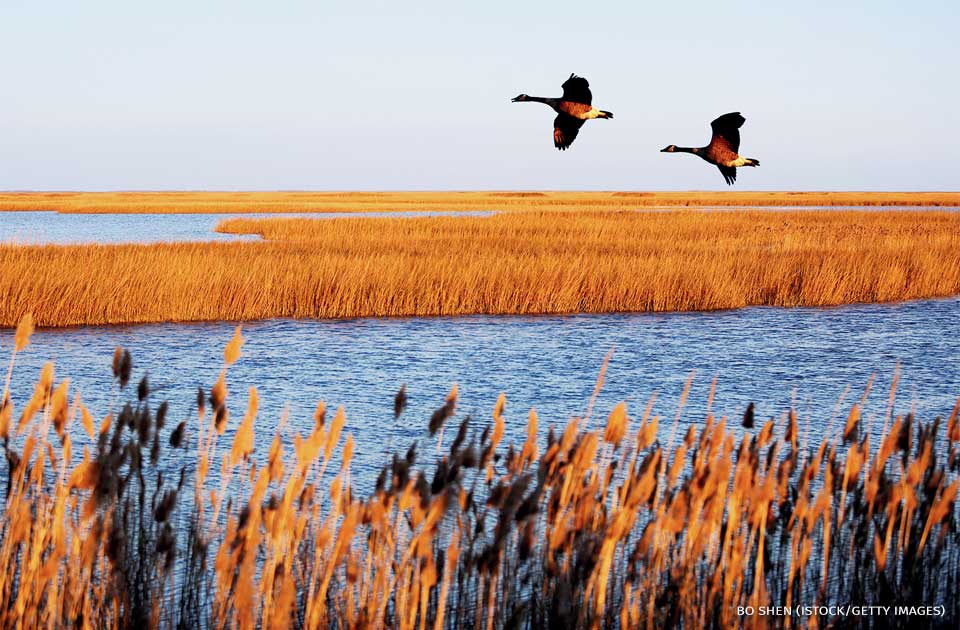
Canada geese migrate through the Bombay Hook refuge.
AMERICA’S WILD, NATURAL PLACES have long been sites of refuge for both people and wildlife, and perhaps nowhere is this more true than the havens that make up our National Wildlife Refuge System. At Bombay Hook National Wildlife Refuge, near me in Delaware, I’ve seen elusive least bitterns and tricolored herons, as well as American avocets, black-necked stilts and red knots. It’s a place for feeling connected, making memories and finding calm.
President Theodore Roosevelt established the first wildlife refuge in 1903 to protect nesting brown pelicans in Florida. Since then, the system has grown into the largest network of lands and waters in the world dedicated to wildlife conservation. Today it includes more than 850 million land and marine acres, providing vital habitat for more than 220 species of mammals; 700 species of birds; and 1,250 species of fish, reptiles and amphibians.
Every U.S. state and territory is home to at least one wildlife refuge. Many are within driving distance of large cities, providing opportunities for hunting, fishing, wildlife watching, hiking, kayaking and communing with nature. More than 67 million people visit wildlife refuges annually, generating $3.2 billion in economic activity and supporting more than 41,000 jobs across the country.
THE NATIONAL WILDLIFE REFUGE SYSTEM:
• provides vital habitat for more than 2,000 wildlife species
• welcomes more than 67 million visitors annually
• generates more than $3 billion in economic activity
• supports more than 41,000 jobs nationwide
Despite all refuges do for wildlife and people, these treasured places are in trouble. Wildlife refuges long have been among the least-funded federal public lands in the United States, and decades of congressional underfunding has left the system in crisis. While more and more people enjoy refuges each year, staff positions have been slashed by more than 30 percent in the last 15 years, and a budget cut of an additional 22 percent was proposed in early 2025. Many refuges have no on-site staff at all, and several states have no refuge law enforcement officers, leaving visitor centers closed, maintenance delayed, public safety in jeopardy and critical conservation work at risk.
We know nature has the power to unite us. We must come together to ensure our national wildlife refuges have the resources they need to thrive. By protecting these wild places and the wildlife that depend on them, we’re protecting our own health, our economy and our future.
LEND A HAND
See which refuges most need your support. Email Collin O’Mara at president@nwf.org.