Seniors Who Garden Together Age Gracefully Together
Retirement communities nationwide are building camaraderie and vibrant garden ecosystems through Certified Wildlife Habitats
- By Doreen Cubie
- Habitat Gardening
- Sep 23, 2026
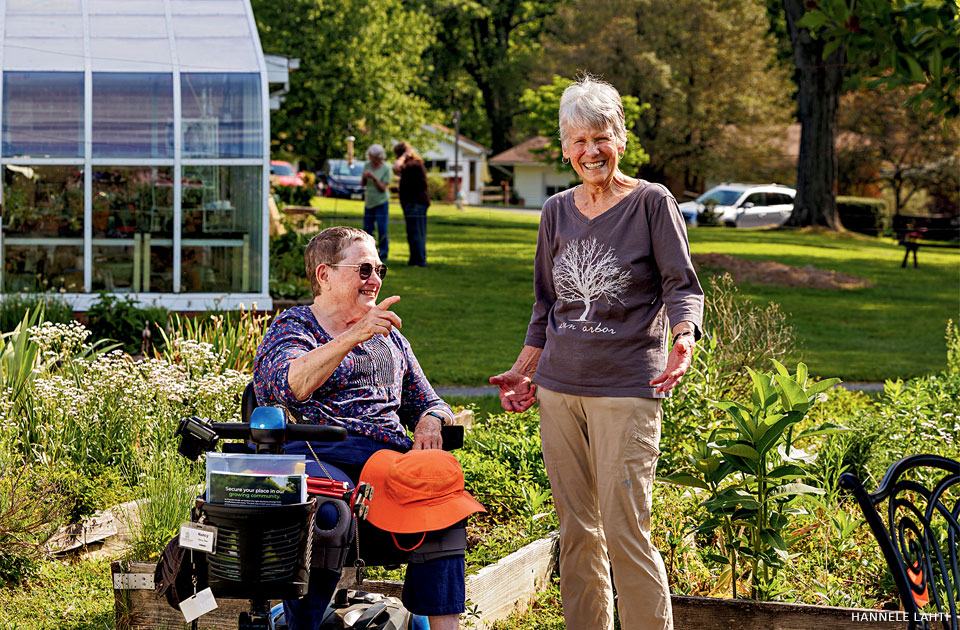
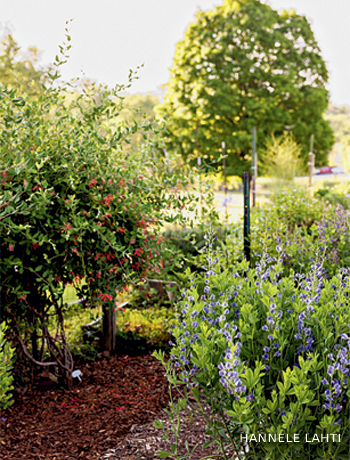
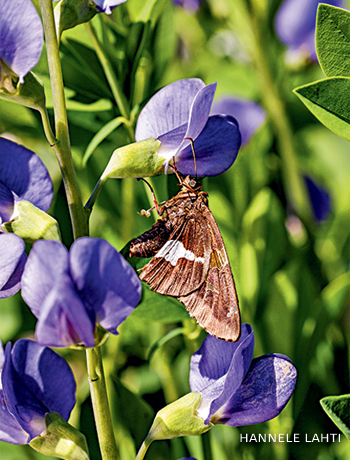
Nancy Rea and Susan Thomas (above, left to right) enjoy their certified habitat at Friends House, where gardens of coral honeysuckle, blue wild indigo and other native plants (below) nurture insects such as silver-spotted skippers (bottom).
WHEN HEALTH ISSUES forced Nancy Rea, 81, to leave her home and yard full of oak trees, asters, sunflowers and other native plants 14 years ago, she thought her gardening days were over. But when Rea moved to Friends House, a retirement community set on 62 rolling acres in Sandy Spring, Maryland, she found an active group of wildlife gardening enthusiasts. Together, they have developed several large gardens filled “with many native plants, including butterflyweed, sweetspire and dogwood” that support a variety of native wildlife, Rea says.
Friends House is not that unusual. In 2025, it became one of more than 50 senior communities across the country that feature National Wildlife Federation Certified Wildlife Habitats® on their properties. About 80 miles east of Friends House in Chestertown, Maryland, for example, Heron Point’s certified habitat brims with cardinal flower, milkweed, coneflower and other native plants that nurture wildlife on the shore of the Chester River. And just outside Atlanta, Park Springs, certified last year, has a pollinator garden that attracts bees, butterflies and other insects throughout the growing season.
Like all NWF habitats, these gardens provide wildlife with food, water, cover and places to raise young and are maintained using sustainable practices. According to Mary Phillips, who heads NWF’s Native Plant Habitat Strategy and Garden for Wildlife® programs, certified habitats can support two times more wildlife than turf lawns.
Phillips believes senior communities and certified habitats are a natural fit. Wildlife gardening “is a simple, low investment and active way to create beauty outside your door and make a difference during a time of life when you feel less control,” she says.
The certified habitat at Friends House supports native wildlife ranging from groundhogs, foxes and deer to snapping turtles, frogs and insects, says 82-year-old Susan Thomas, co-clerk of the community’s Environment Committee. “We have recorded more than 180 species of birds on the property,” including “lots of bluebirds and bluebird houses.”
Butterflies also are plentiful, including monarchs. One adult monarch tagged at Friends House in September 2025 was recaptured and rereleased at El Rosario Sanctuary in Michoacán, Mexico, the following February. It had traveled nearly 2,000 miles.
Elsewhere, a handful of senior communities have gone further, earning designation as an NWF Community Wildlife Habitat™. To qualify for community certification, an entity—most often a city, town, neighborhood or homeowners association—must certify a specific number of individual habitats (with that number determined by community size) as well as sponsor education and outreach programs.
One example is Trilogy at Redmond Ridge, a development of about 1,500 homes just east of Seattle where residents are all 55 or older. “At Trilogy, our wildlife habitat has black bears, cougars, bobcats, deer and egrets, herons, bald eagles and other birds,” says Cynthia Hall, an eight-year resident who spearheaded the certification effort. “We also have a demonstration garden divided into three sections: pollinator, shade and woodland. It’s a great place to see black-headed grosbeaks and other songbirds.” Trilogy’s environmental group works on conservation initiatives ranging from removing invasive plants like Himalayan blackberry to promoting measures to stop or slow wildfires.
Such activities, along with wildlife gardening itself, benefit not only wildlife but also people. At Friends House, the NWF habitat “gets people outside, which is wonderful,” Rea says. “Even if they use a mobility device, they can get around to see the native plants and the abundance of birds and insects and other pollinators in the habitat.” To assist those who might need a little help, some portions of the garden include raised beds and paved pathways to give more people access.
Phillips agrees that wildlife gardening benefits residents of senior communities. “Bird song, beautiful fragrant plants, active pollinators create a healthy haven that heals and soothes people,” she says. Her statement is backed by scientific research: Phillips cites a study, conducted in South Korea and published in 2017 in HortScience, showing that gardening as a low to moderate physical activity led to positive effects on the blood lipid profiles, blood pressure and level of inflammatory markers in women older than 70.
Phillips notes that baby boomers were young when many of today’s most significant environmental laws were passed and when the first Earth Day was held in 1970. More recently, many “reconnected to nature during the pandemic and saw firsthand the results it had on their mental and physical health,” she says. “As the older generation continues to age and move into retirement, they are taking these learnings and motivation with them. They don’t want to stop just because they are getting older.”
Doreen Cubie is a Pennsylvania-based science writer.
More from National Wildlife magazine and the National Wildlife Federation:
Pollinator Gardens on Baltimore Urban Farms Feed the Local Ecosystem »
Why Is Nature Good for Us? »
A Community Garden Grows in Florida »
Horticultural Therapists Cultivate the Curative Power of Gardening »
Washington State Residents Nurture a Web of Wildlife Havens »