Photography With Patience
After watching Hoback, a well-known Grand Teton moose, for days, photographer Deena Sveinsson finally got her shot
- By Delaney McPherson // Photo by Deena Sveinsson
- Wildlife Photos
- Sep 23, 2026
IN HER FIRST CAREER as a commercial airline pilot, Coloradan Deena Sveinsson drew on many useful traits that translate to her current work as a wildlife photographer: attention to detail, technical mastery and a type A personality. But one new skill she had to develop was patience.
“Sometimes I wait around and it doesn’t work out, and sometimes it does. And when it does, it’s worth the wait,” says Sveinsson, who has been taking pictures professionally for the past 11 years. “I spend a lot of time waiting. If I got paid for that, I’d be rich.”
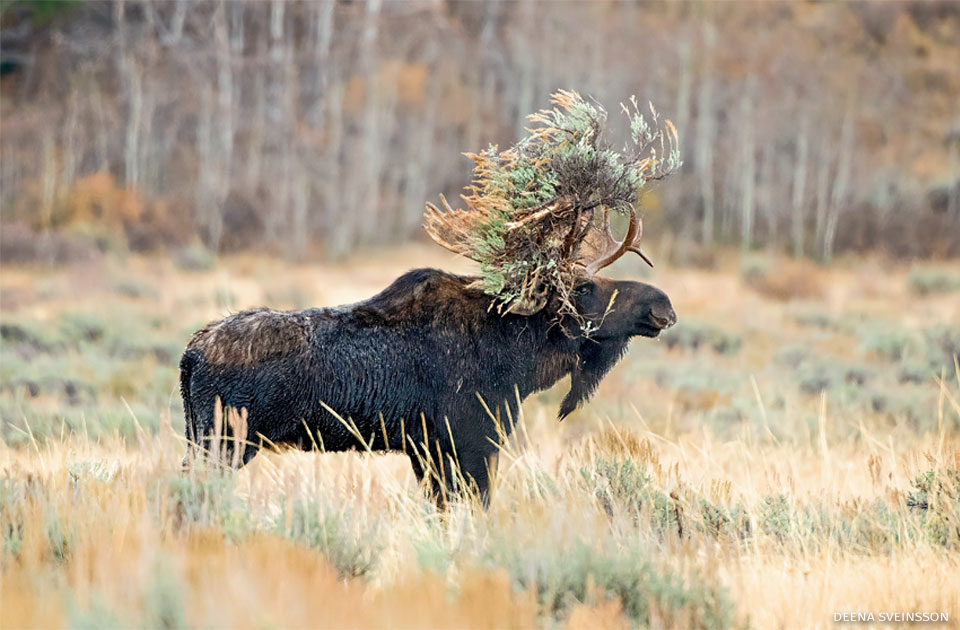
Sveinsson’s patience often pays off with moose, one of her favorite animals to photograph and the subject of her first-place winner in the mammals category of the 2025 National Wildlife® Photo Contest. On a fall trip to Grand Teton National Park in Wyoming, she got word that Hoback (above), a well-known moose, had been spotted nearby. When she found him, he had been injured while sparring with another moose. Waiting for an opportunity, Sveinsson watched him for days.
In time, Sveinsson followed Hoback to a field where he began expressing interest in a female moose. When a younger bull arrived, Hoback chased him into the bushes and returned with his antlers covered in foliage. “People don’t often see a moose with a crown of bitterbrush,” she says. See more of her work.
More from National Wildlife magazine and the National Wildlife Federation:
Professional Tips on Photographing a National Park in Winter »
Four Vital Tips for Ethical Wildlife Photography »
See Last Issue’s Featured Photo »