Mark Dion's Room With a Viewpoint
The artist merges fact, fiction and climate anxiety in his ‘follies’: works that, Dion says, ‘seduce the viewer into spending a little more time’
- By Jennifer Wehunt // Art by Mark Dion
- Conservation
- Sep 23, 2026
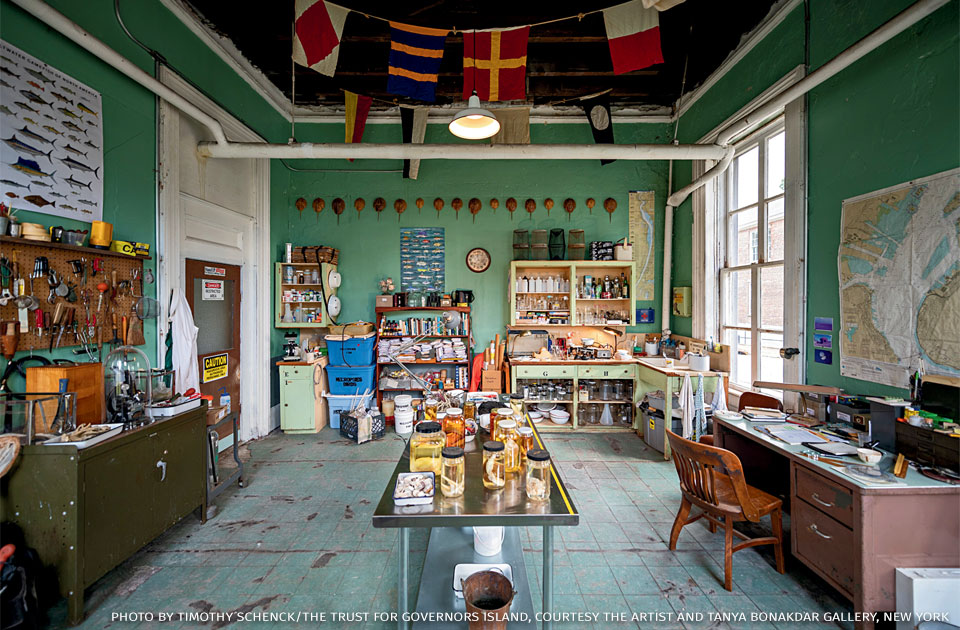
THE ARTIST MARK DION wears his climate anxiety on his sleeve. Take “The Field Station of the Melancholy Marine Biologist” (above), installed since 2021 on Governors Island in New York and first mounted in New Orleans. Malaise is right there in the title of the piece, with influences ranging from John Steinbeck’s fictional Cannery Row and real-life Sea of Cortez expedition log to the marine supply stores of Dion’s own childhood in gritty New Bedford, Massachusetts. Then there’s this genre of his work, which Dion calls “follies” in the 18th-century tradition of whimsical buildings—a term that, since its coining, pointed at pointlessness. But as with stage sets or crime scenes, the longer you look, the more secrets his delightfully elaborate vignettes reveal. By “seducing the viewer into spending a little more time,” Dion gets the public to pay attention; by mounting anachronistic spectacles, wherein vintage vitrines share lab space with contemporary maps, he gently nudges us away from the realm of pure science toward humor and imagination. We’ll need all of the above, he believes, to fashion a sustainable future. It’s not all doom and gloom. Dion finds hope in today’s youth who have “internalized a lot of things that were hard-fought wins for my generation. Like, I’ve never seen a young person litter. Ever.” Follow him on Instagram.
More from National Wildlife magazine and the National Wildlife Federation:
As Seas Rise, So May Wildlife Translocations »
Courtney Mattison Sees Soft Power in Small Marine Life »
See Last Issue’s Featured Artist »