Mosquitoes’ Growing Taste for Human Blood
Plus, how the smell of lynx may keep deer moving, a golden age of species discovery and more science news about wildlife
- By Laura Tangley
- Wildlife Science
- Jun 24, 2026
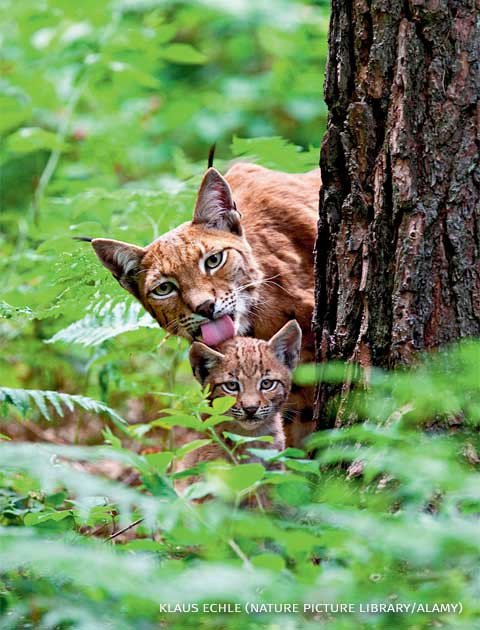
The Fear-Inducing Scent of a Lynx
For resource managers working to restore native forests, the loss of saplings to browsing by overabundant deer can be a significant challenge. At the same time, efforts to control deer numbers are both expensive and labor-intensive. While wolves and native cats can effectively curb deer overpopulation, these predators have been extirpated from many habitats across North America and beyond. In a study conducted in 44 experimental forest plots in Germany, however, researchers from the University of Freiburg discovered that the mere smell of such predators—particularly the Eurasian lynx (above)—was enough to deter deer. In the Journal of Applied Ecology, they report that adding concentrated scents of dung and urine from the predators both reduced the number of deer visiting a plot and lessened browsing by those that did visit. Other scents added to control plots did not have the same effect. “At a time when debates around large carnivore conservation often focus on conflicts, our study highlights the benefits these species bring to landscapes,” says co-author Walter Di Nicola. While lynx had been reintroduced to the forests where scientists conducted their work, he adds that in forests that remain lynx-free, “deer still have some innate fear of predators, even if those predators have been absent for generations.”
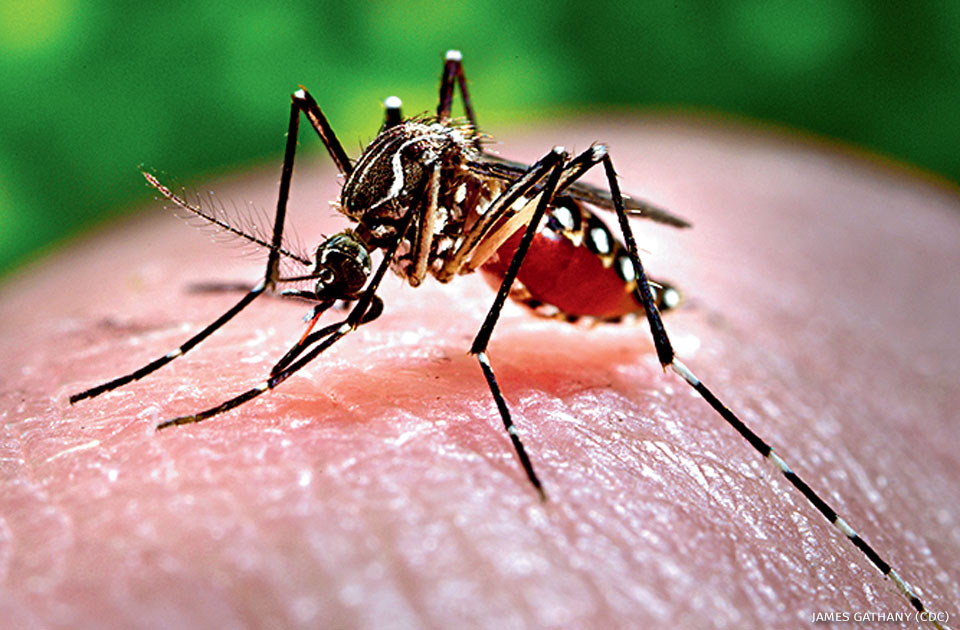
A Growing Taste for Human Blood
Mosquitoes that inhabit Brazil’s Atlantic Forest always had plenty to feast on. Stretching more than 1,800 miles along the country’s coastline, this biodiverse habitat is home to over 2,000 species of the vertebrates female mosquitoes depend on for blood meals (above). As humans increasingly destroy and degrade the region’s ecosystems, however—leaving just a third of the original habitat intact—bird, mammal, reptile and amphibian numbers are plummeting. In Frontiers in Ecology and Evolution, scientists report that mosquitoes are adapting—by increasingly feeding on human blood. Using light traps to capture 1,714 mosquitoes in two Atlantic Forest reserves, the researchers extracted DNA from the blood meals of 24 females. DNA analysis showed that the insects had fed on six birds, one amphibian, one canid, one mouse and 18 humans. “With fewer natural options available, mosquitoes are forced to seek new, alternative blood sources,” says co-author Sérgio Machado of the Federal University of Rio de Janeiro. In a region rife with life-threatening mosquito-borne diseases—including yellow fever, malaria, dengue, Zika, Mayaro, Sabiá and chikungunya—this new taste for humans “significantly enhances the risk of pathogen transmission” to people, he adds.
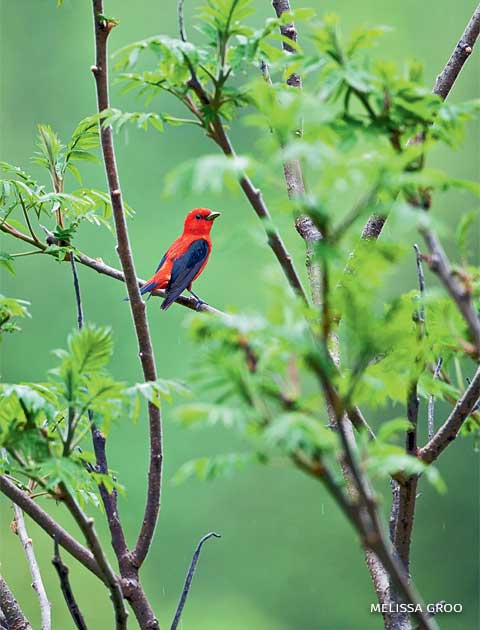
Migratory Songbirds Rely on Five ‘Great Forests’
For many of us in the United States, the joys of summer include spotting colorful neotropical migratory songbirds (such as scarlet tanagers, above) that breed in our forests and spend winter beyond our borders. Analyzing data from the Cornell Lab of Ornithology’s eBird platform—containing more than 2 billion bird observations submitted since 2002—scientists from the Wildlife Conservation Society (WCS) and Cornell Lab report in Biological Conservation that one-tenth to nearly one-half the populations of 40 neotropical migrant species depend on just five “great forests” during winter. Stretching in an ecological corridor from southern Mexico to northern Colombia, these forests face many threats, particularly cattle ranching. “If we lose the last great forests of Central America—and we are—we lose the birds that define our eastern forests,” says co-author Jeremy Radachowsky of WCS, who hopes the study will help spur international conservation action.
Microscope
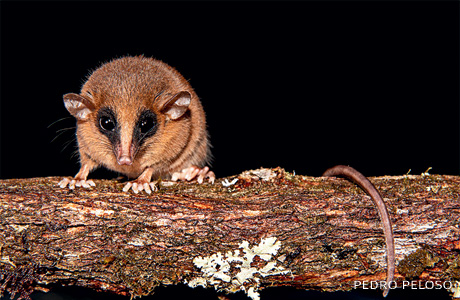
Golden Age of Species Discovery?
Scientists are identifying an average of more than 16,000 new species a year (including this mouse opossum, pictured, described in 2025), a faster rate of species discovery than ever before, University of Arizona biologists report in Science Advances.
More from National Wildlife magazine and the National Wildlife Federation:
Safer Alternatives to Spraying for Mosquitoes »
Blog: Five Migrating Birds That May Stop in Your Yard »
New in Wildlife Science: Can Lemurs Help Us Avoid ‘Inflammaging’? »