The Plight of the Karner Blue Butterfly
Teams of experts in the Northeast are working together to bring Karner blue butterflies—and the sundial lupines on which they depend—back from the brink
- Text and photos by Lauren Owens Lambert
- Conservation
- Jun 24, 2026
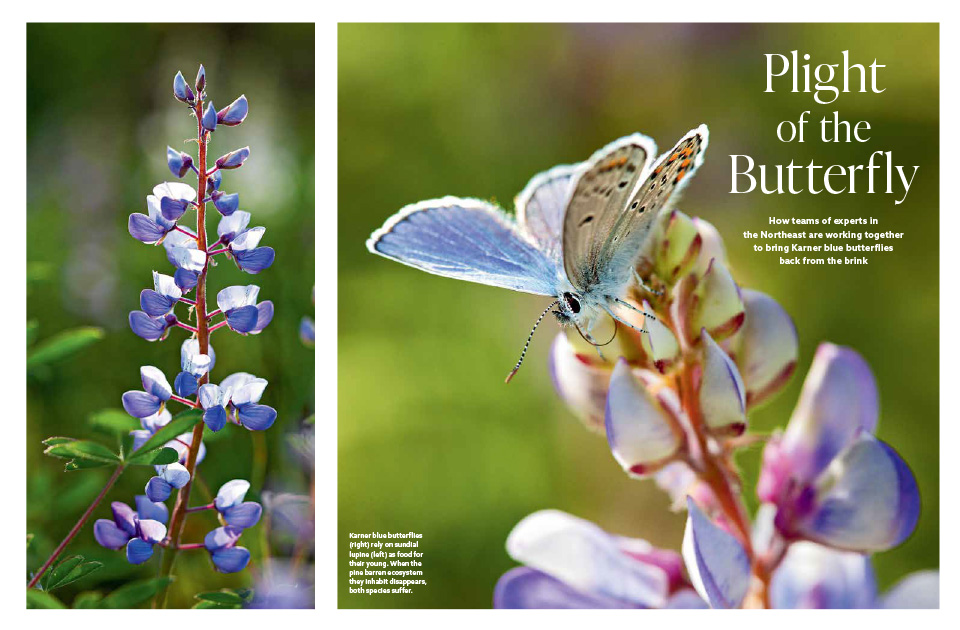
Karner blue butterflies (above, right) rely on sundial lupine (above, left) as food for their young. When the pine barren ecosystem they inhabit disappears, both species suffer.
TWO YEARS AFTER A PRESCRIBED BURN, a small blue butterfly tickles the petals of a flower as she dances by. Feeling around with her antennae, she carefully lays her eggs beneath the leaves of a sundial lupine. There are more than 200 species of lupine, but sundial lupine is the sole food source for her caterpillars, so she is setting up her offspring for the best chance of survival. What she doesn’t know is that she is not alone. Scientists across the Northeast are here to help.
Historically found in a continuous range extending from Minnesota to Ontario, Canada, and into Maine, the Karner blue butterfly was listed as a federally endangered species in 1992. While it was once spotted in 12 states, it is now documented in only five: Wisconsin, Michigan, Ohio, New York and New Hampshire. The number of Karner blues has declined by 99 percent over the past 100 years.
These butterfly populations are closely linked to the presence of the sundial lupine, which is also known as a fire flower. Wild sundial lupines are some of the first plants to appear postfire in pine barrens and oak savannas—ecosystems that are globally rare. Widespread 20th-century fire-suppression policies led to the pine barrens shrinking dramatically, with fire-dependent species, including sundial lupine, declining.
“There are fewer than 20 inland pitch pine–scrub oak barrens in the world,” says Neil Gifford, the conservation director for the Albany Pine Bush Preserve in New York, one of the largest remaining examples of pine barren ecosystem. Gifford is working to conserve habitat—often degraded or fragmented by development, invasive species and fire suppression—to support “a tremendously large assemblage of rare biodiversity, the most famous of which is the Karner butterfly.”
Together with a captive rearing program in New Hampshire and lupine genetic research in Boston, these efforts are giving the Karner blue butterfly its best chance to survive and thrive. See the photos below to learn more about joint efforts to bolster the butterfly.
“What we can potentially do is restore those connections between the populations of lupine.” –Cooper Kimball-Rhines
Read about Lauren Owens Lambert.
-
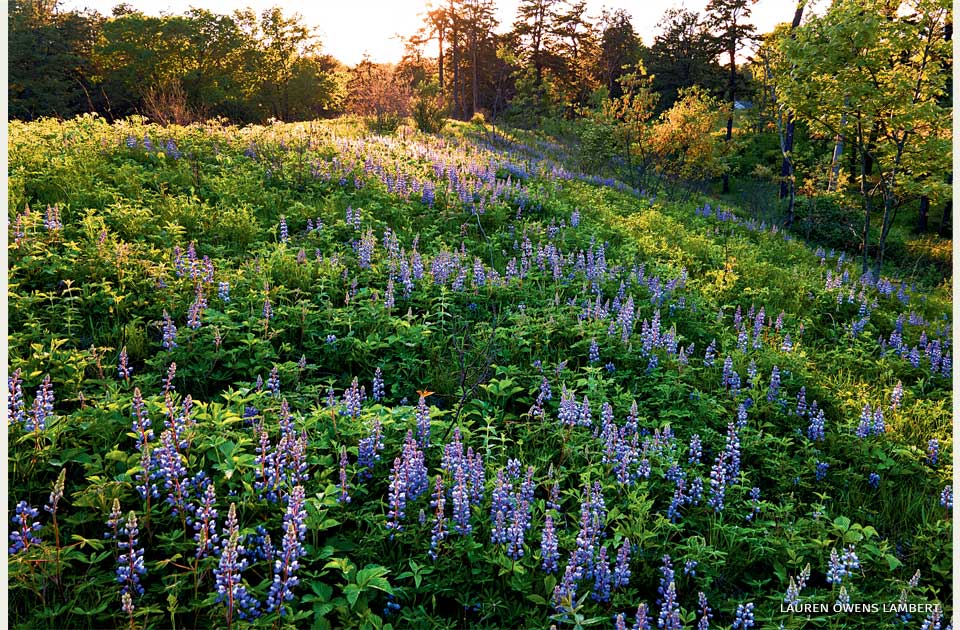
Karner blue butterfly populations are closely linked to the presence of sundial lupine, the sole food source for their caterpillars.
-
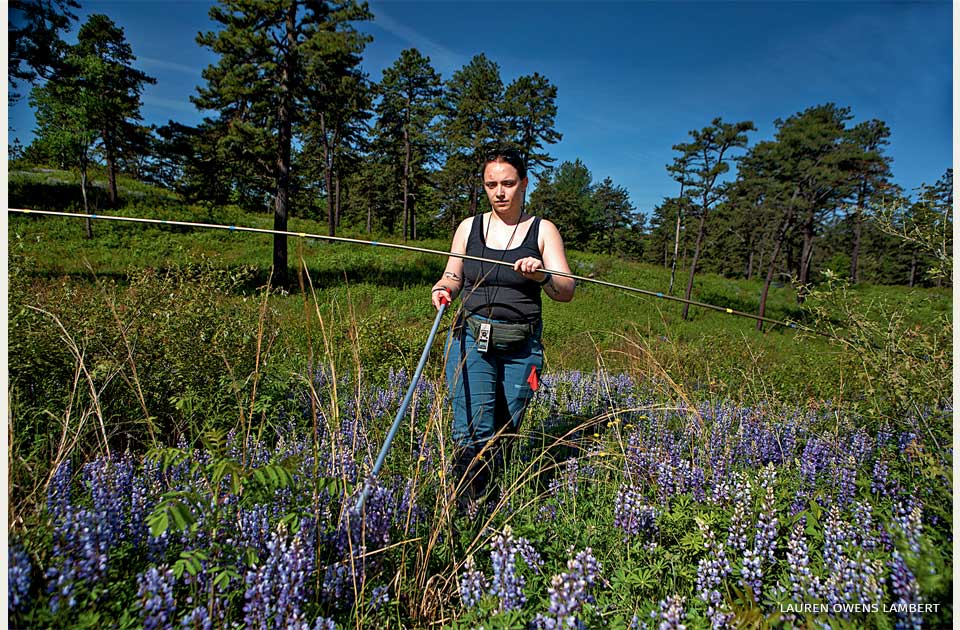
Karner blue butterflies occupy roughly 2,000 of the Albany Pine Bush Preserve’s over 3,400 acres, with an average annual population of about 10,000 individuals. To come up with the estimate, the survey team collects population data from 10 percent of the total occupied butterfly habitat.
-
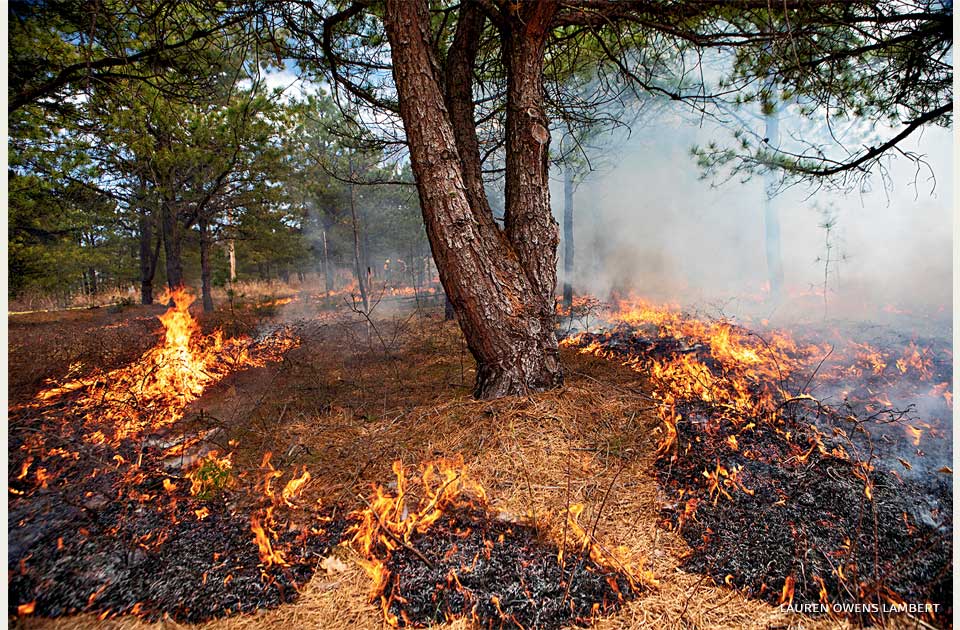
In Albany, New York, and at the New Hampshire Army National Guard base in Concord, New Hampshire, land managers are working to restore prescribed burns that help sundial lupines and the butterflies flourish.
-
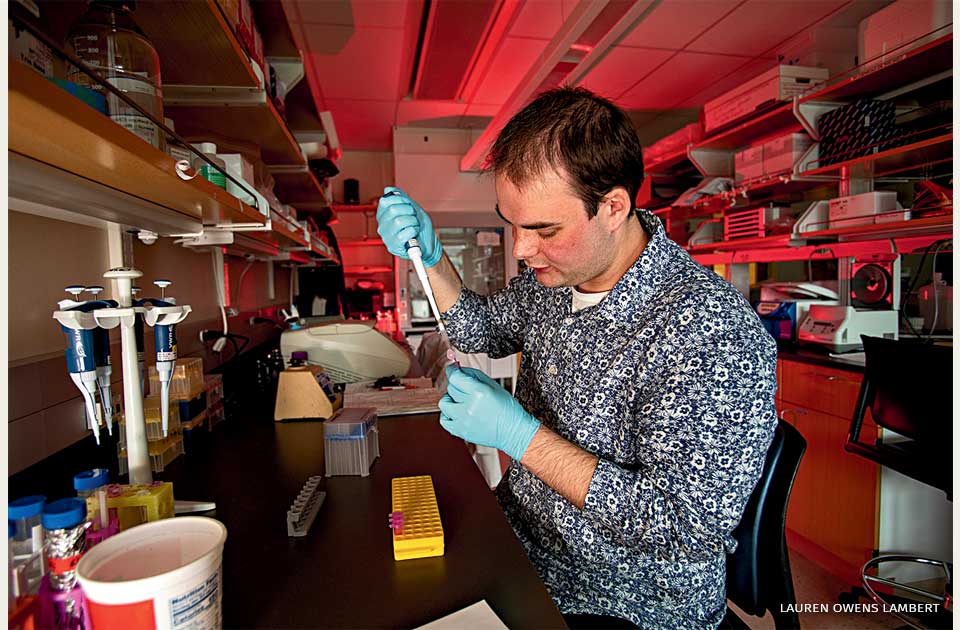
At the University of Massachusetts Boston, Cooper Kimball-Rhines, a Ph.D. student, is studying the genetic diversity of native lupine.
-
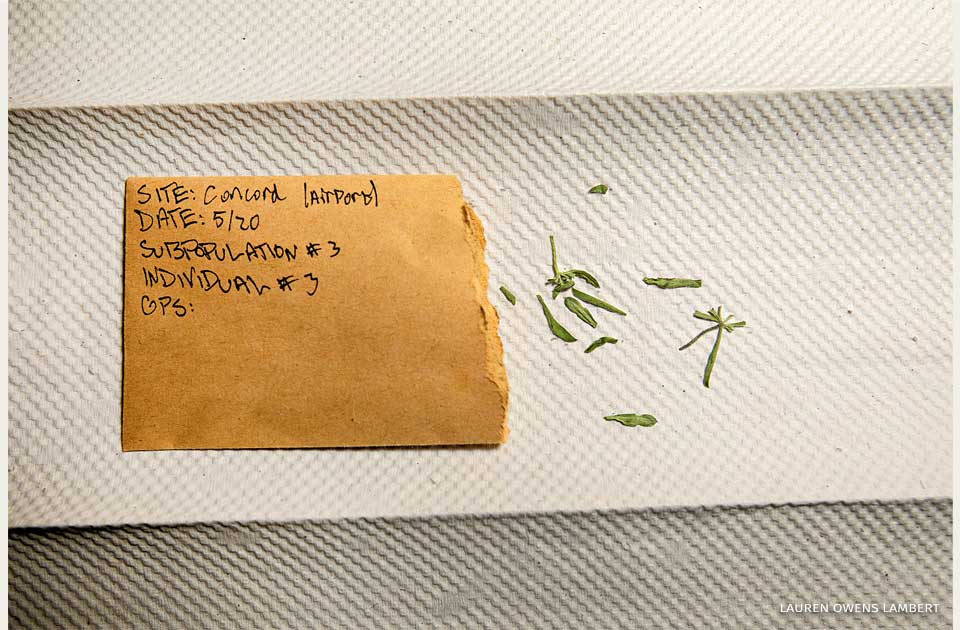
By sequencing lupine DNA using dried leaves, Kimball-Rhines hopes to identify sources for new seeds that can support restoration efforts, increasing the resiliency of the species. The lupine’s “population in New Hampshire, for example, is going to be different from the populations in New York, because they have not been interbreeding for quite a while,” he says. “Even though we’re talking about conservation on the scale of a single population, it can still be really important, because that population might contain something that is genetically unique.”
-
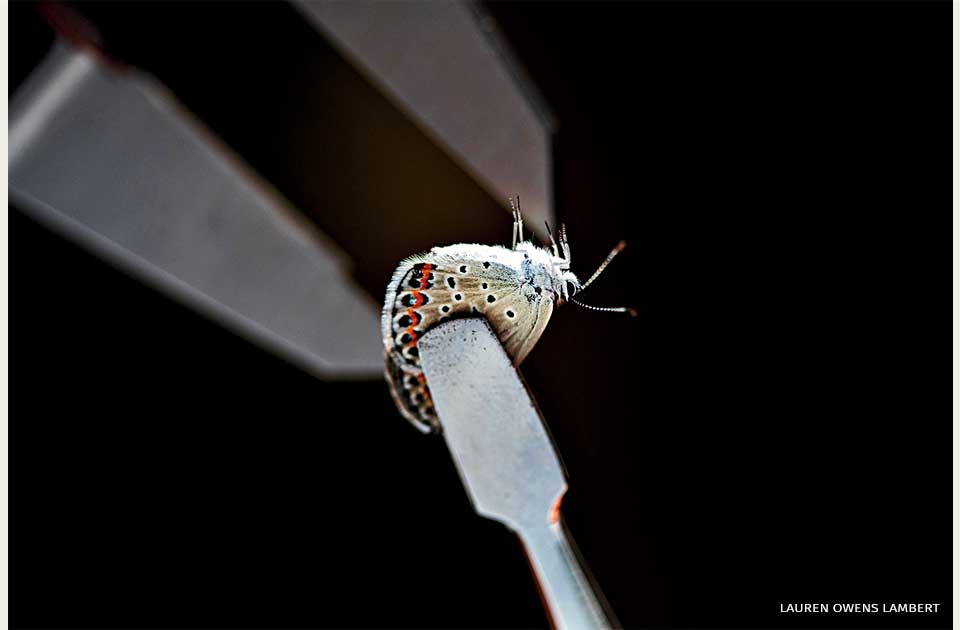
Inside old military barracks in Concord, New Hampshire, a Karner blue captive-rearing effort has raised and released over 36,000 butterflies since 2001, with a current population of 3,000 to 5,000 individuals.
-
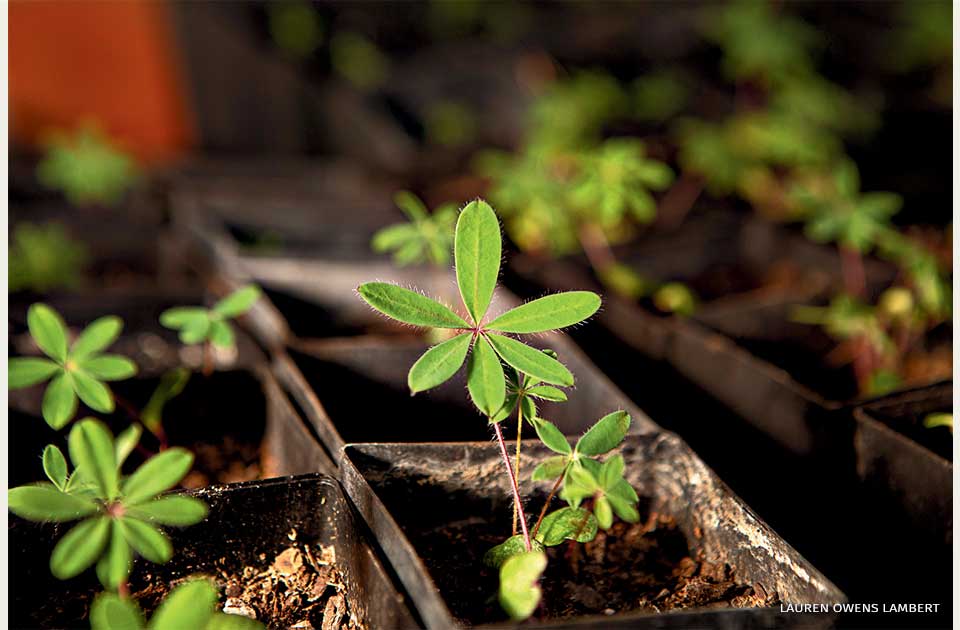
The program—a partnership of New Hampshire’s Army National Guard and Fish and Game Department with the U.S. Fish and Wildlife Service—also grows native sundial lupines and exports butterfly chrysalides to the Albany preserve, “the only state” to do so, per Heidi Holman, the program’s head.
-
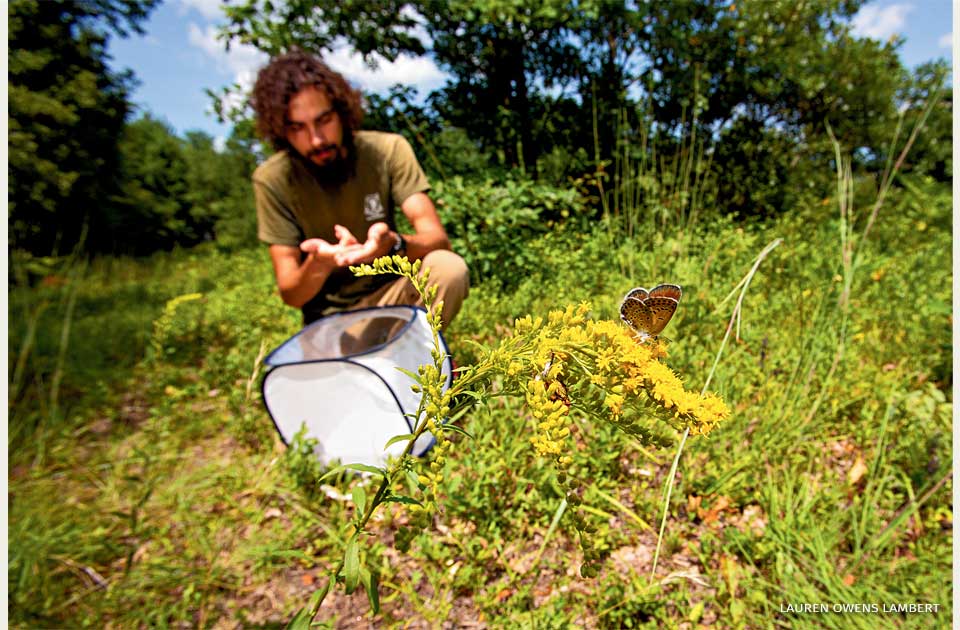
Introducing more genetic diversity to the Albany butterfly population can mitigate issues related to inbreeding, such as lower overall fitness and fertility, and increased risk of disease.