Manatees' Coal Problem
Transitioning from fossil fuels like coal to cleaner energy sources is good for people and the planet, but it’s a looming crisis for Florida’s manatees
- Text and Photos by Jason Gulley
- Conservation
- Sep 23, 2026
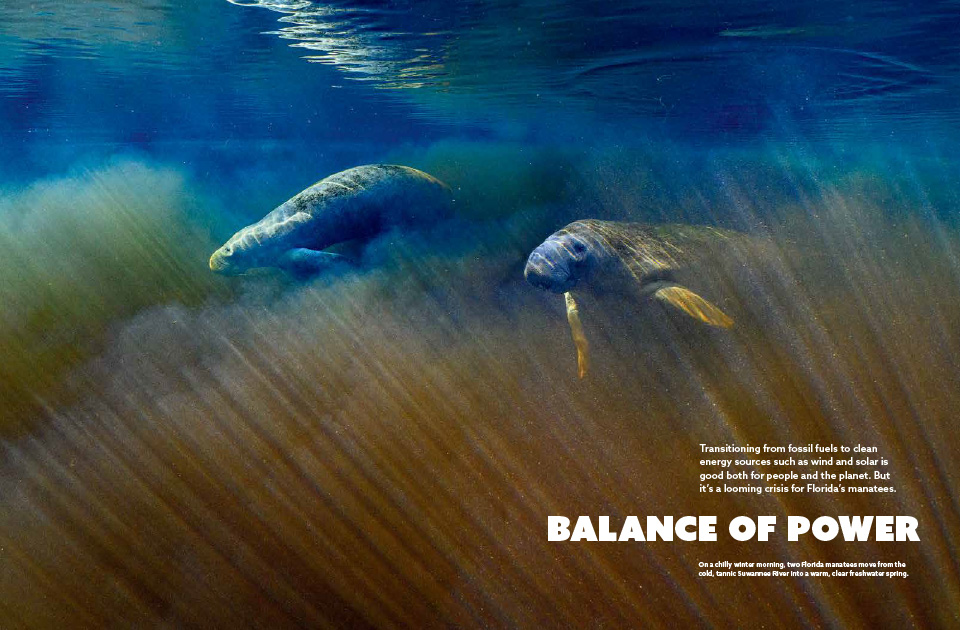
On a chilly winter morning, two Florida manatees move from the cold, tannic Suwannee River into a warm, clear freshwater spring.
DESPITE CHUBBY APPEARANCES, Florida manatees have surprisingly little body fat. One result: These federally threatened mammals cannot survive in water colder than about 68 degrees F. When ocean and river temperatures plunge below that threshold, which they do often during winter, manatees must find warmer water—or die.
Historically, the animals escaped the cold by heading to Florida’s freshwater springs, where groundwater bubbling up from aquifers runs about 72 degrees F. Yet mid last century, as manatee numbers grew and coal-fired power plants sprang up along the coasts, many individuals began opting instead for the plants’ easier-to-access cooling-water discharge canals, where temperatures can reach 80 degrees F even on the coldest days. Today, more than half of Florida’s roughly 10,000 manatees depend on these power plants to survive winter.
While helpful to the manatees, coal-fired power plants are harmful both to people and the planet. The most polluting way to produce electricity, the plants emit toxic substances into the air that damage human health. By releasing greenhouse gases, they also contribute to climate change. Recognizing these harms, governments and businesses increasingly have switched to cleaner sources of energy, namely solar and wind. President Donald Trump, when he returned to office last year, threw a lifeline to the older plants with an aggressive, and ongoing, pro-coal campaign. Even so, most experts agree that the transition to clean energy is inevitable and that the state’s coal and other fossil fuel plants likely will be retired within the next few decades.
A victory for the environment, these closures will create a crisis for the manatees that now rely on the plants’ warmwater discharge canals. If trapped in cold water for long periods, the animals develop cold stress syndrome. “It’s basically the equivalent of us getting frostbite and hypothermia,” says Molly Lippincott, senior curator of Florida and marine life at ZooTampa, which manages the state’s largest nonprofit manatee rescue and rehabilitation center. As blood pools near vital organs to protect them, she explains, white sores and painful lesions begin chewing through manatees’ skin. “Prolonged exposure can lead to pneumonia, and it can be fatal.”
Scientists and conservationists are racing to find alternative winter refuges. Proposals have included installing boilers in the water near power plants to replace heat lost from their cooling systems, but high costs likely preclude that option. Most biologists say the best course lies in the animals’ historical warmwater habitats: Florida’s freshwater springs.
Restoring access to some of those springs will require removing dams and other structures that now block the way. In addition, “we need to take care of the plants” manatees feed on, says U.S. Geological Survey manatee expert Robert Bonde. The famously vegetarian animals, which weigh an average of 800 to 1,200 pounds each, can eat 4 to 9 percent of their body weight every day.
Yet over the past several decades, declining spring flows caused by soaring groundwater consumption, along with nutrient pollution from sewage and fertilizers, have triggered explosions of algae that choke out the seagrasses manatees need. Fortunately, several state and private entities are leading successful efforts to restore degraded freshwater springs. Conservationists say these projects provide a roadmap for fixing problems in other parts of the state as well as hope for the future. See more manatee photos in the slideshow below.
NWF Priority
Affiliate in Action
To ensure manatees can access healthy warmwater refuges, the Florida Wildlife Federation champions protecting and restoring the state’s natural spring systems, an increasingly important goal as coal-fired power plants close. Read more.
Read about geologist and photographer Jason Gulley.
-
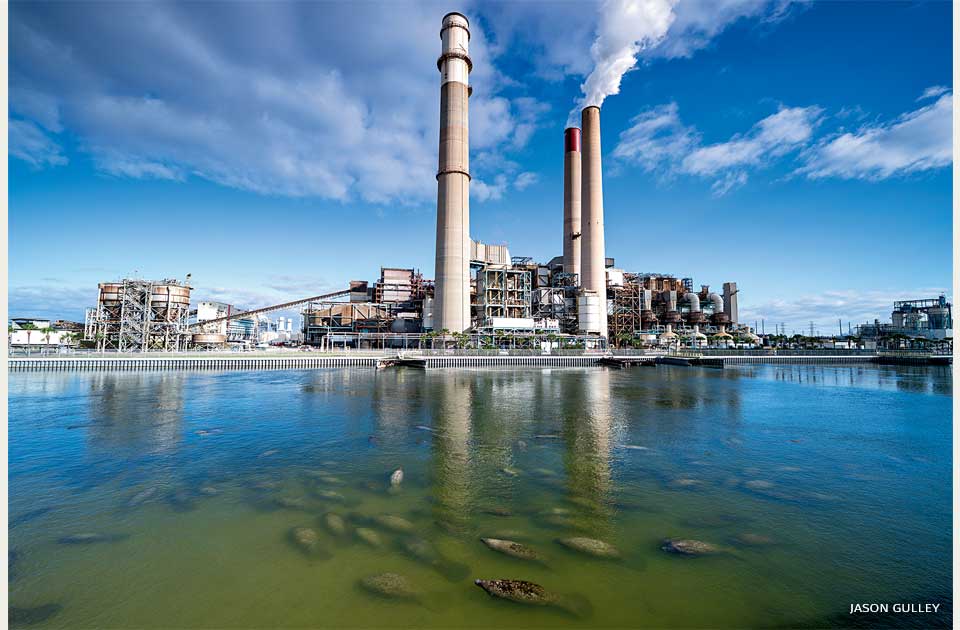
Hundreds of manatees gather in the warmwater discharge canal of Tampa Electric Company’s Big Bend Power Station in January 2023. Even on the coldest days, the water in such artificial refuges can reach 80 degrees F, providing a lifeline for manatees that can die after prolonged exposure to cold.
-
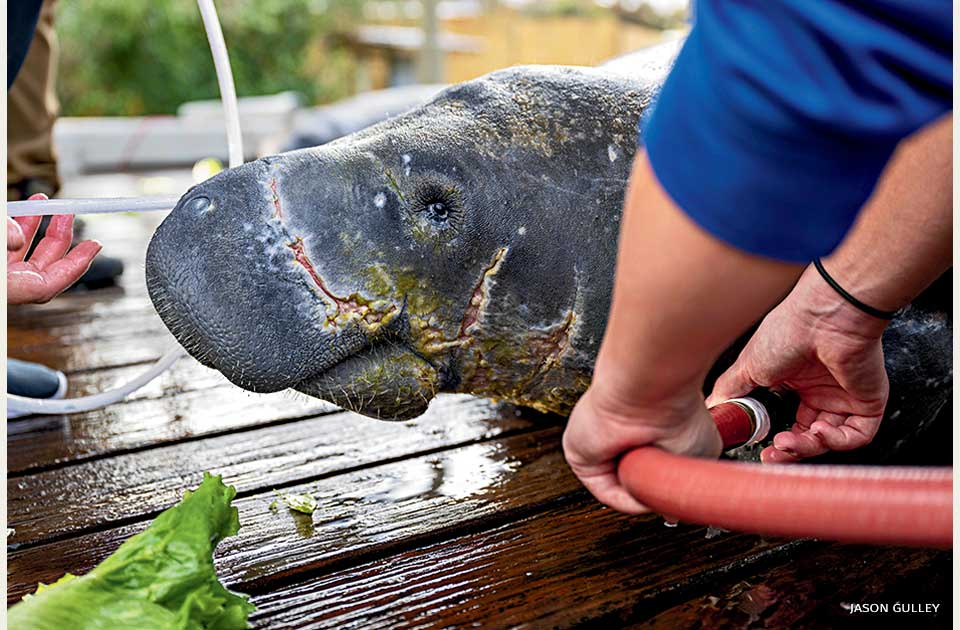
Covered with lesions, a cold-stressed manatee is treated at ZooTampa’s David A. Straz Jr. Manatee Critical Care Center.
-
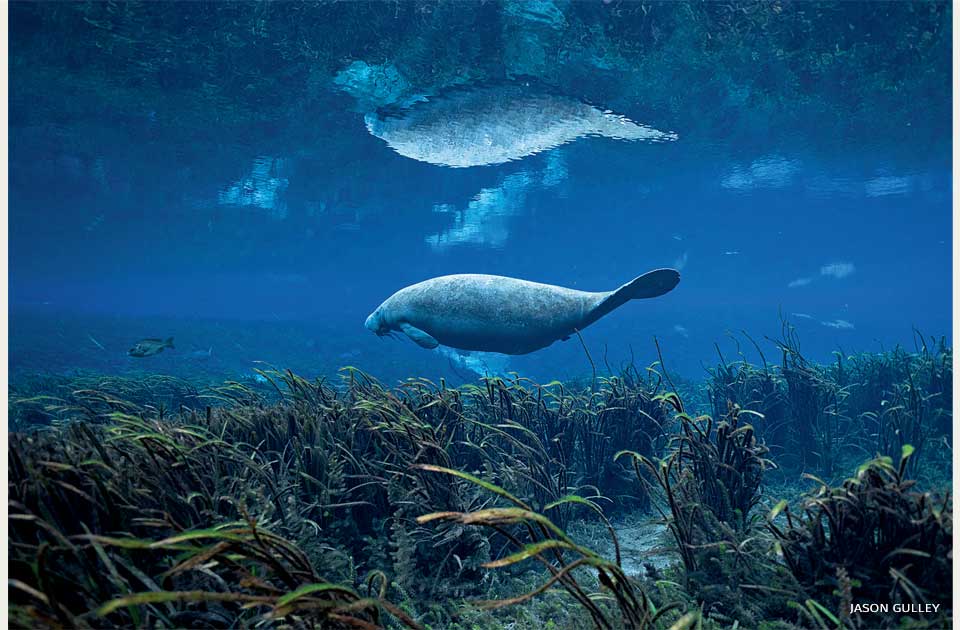
In Florida’s spring-fed Silver River, a pregnant manatee glides above eelgrass in a naturally warm refuge from the cold.
-
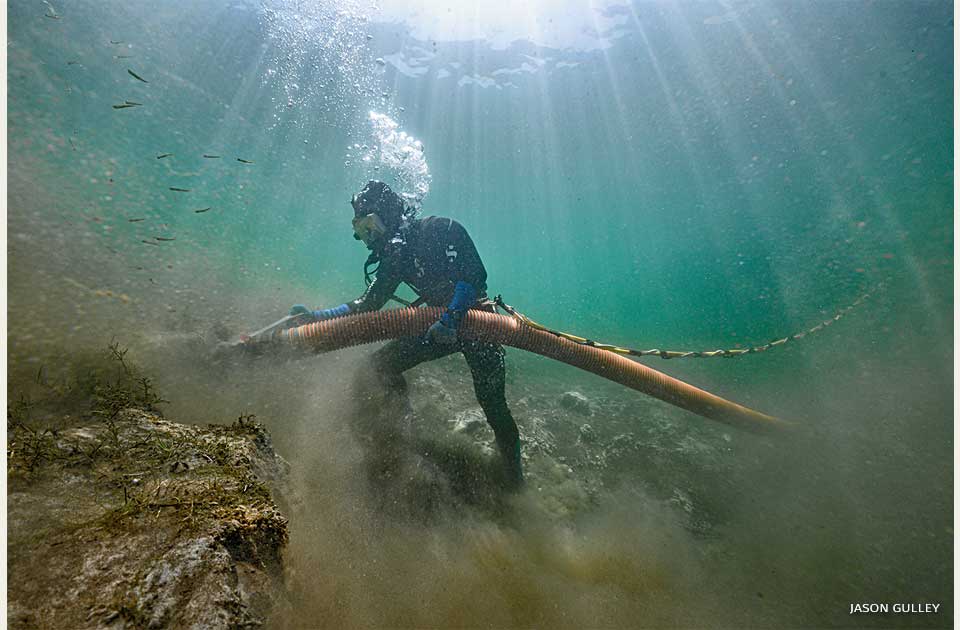
To restore one formerly degraded warmwater refuge, a diver with the company Sea & Shoreline dredges thick organic muck from the bottom of Florida’s Crystal River before replanting grasses. Since the project began in 2015, participants have replanted more than 100 acres of grasses.
-
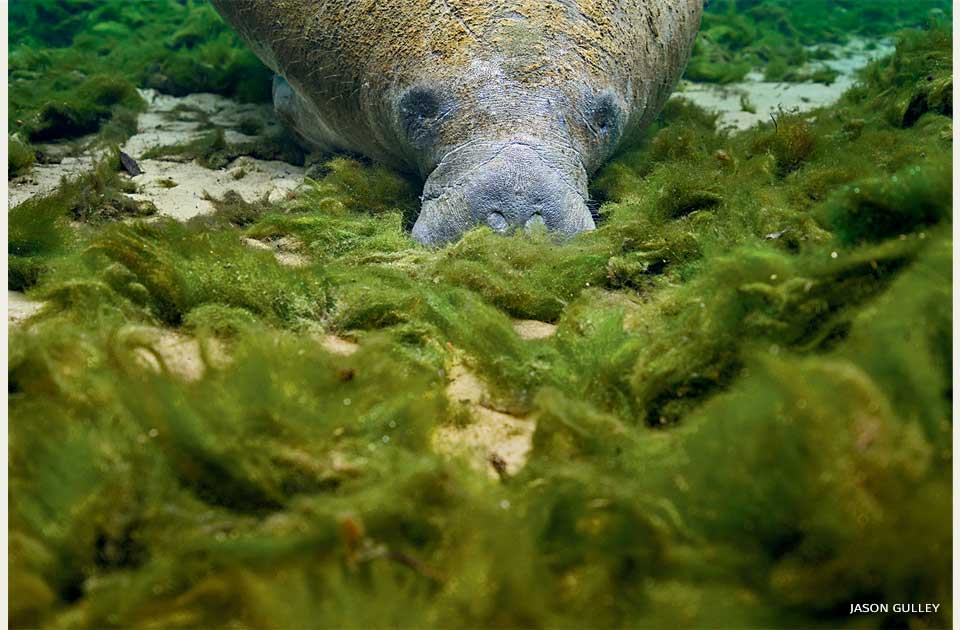
In other spring systems, blankets of thick green algae spawned by nutrient pollution have killed off the aquatic plants manatees feed on.
-
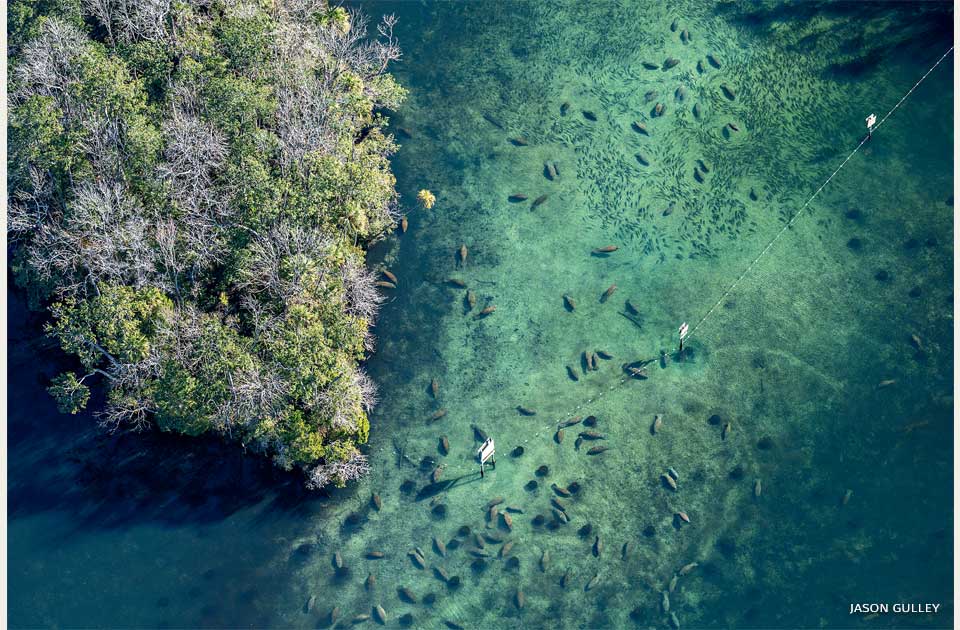
To escape winter’s cold, Florida manatees gather in the spring-fed Homosassa River, a natural warmwater refuge that maintains a constant temperature of 72 degrees F.
-
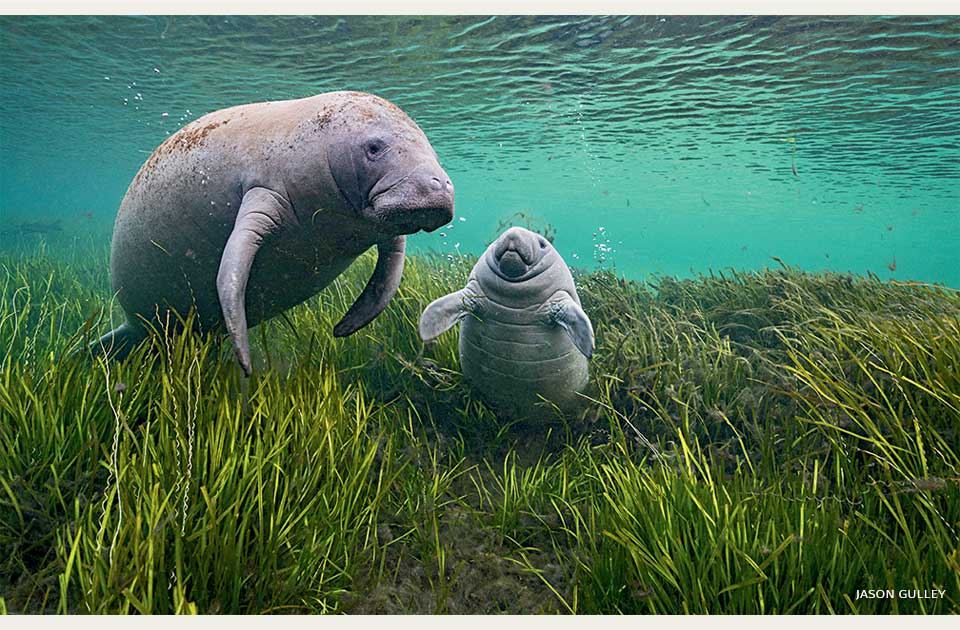
With this critical food rebounding, manatee moms have begun using Crystal River year-round as a nursery to raise calves.