Safe Passage, For Wildlife and for People
Roads are essential economic and social networks for people throughout the world, yet their impact on wildlife is profound.
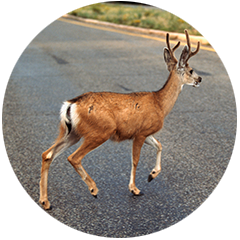
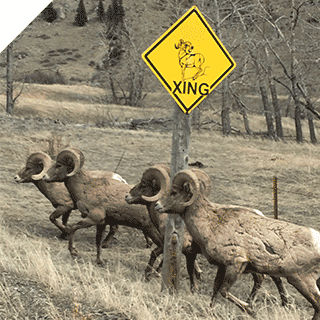
Countless species, from toads and turtles to bears and elk attempt to navigate a dangerous and ever-expanding network of roads on a daily and seasonal basis. Roads can kill or injure wildlife and people via wildlife-vehicle collisions. They can also alter movement and migration patterns for wary animals attempting to cross busy traffic lanes, thereby severing habitat.
These direct and indirect effects can contribute to wildlife population declines or jeopardize efforts to recover endangered species. Globally, mortality caused by wildlife-vehicle collisions is one of the primary causes of biodiversity loss.
CREDIT: CANDACE NONEMAN
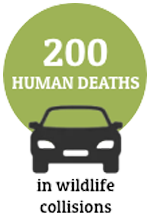
Collisions with wildlife also cause significant human injury and property damage. In the United States, vehicle collisions with wildlife are estimated to cause over 200 human deaths and 29,000 injuries annually, with associated costs estimated to be between $6 and $12 billion. Montana is a hotspot for wildlife vehicle collisions and ranks second in the nation among states where drivers are most likely to collide with wildlife. In Montana, 13% of total reported crashes are wildlife-related and more than 6,000 wildlife carcasses are collected by the Montana Department of Transportation each year.
Crossings Offer Solutions
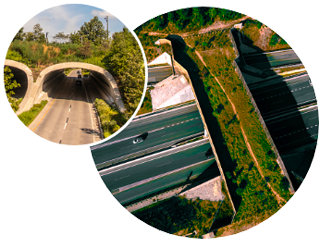
Wildlife crossing structures such as underpasses and overpasses are effective solutions for both wildlife and people. When wildlife crossing structures are paired with exclusion fencing, studies have found an approximate 86% decrease in reported wildlife-vehicle collisions. In the Northern Rockies, Prairies and Pacific Region, the National Wildlife Federation is helping to lead statewide efforts to increase the pace and scale of wildlife crossing implementation and support our affiliates.
Our Work, Our Impact
Wildlife crossings are major infrastructure projects that often require private-public partnerships to leverage resources.
The Federation’s Wildlife Connectivity program has several focus areas:

Lead statewide coalitions, such as Montanans for Safe Wildlife Passage and the Montana Wildlife Transportation Partnership, to bring state agencies and conservation/scientific resources together to advance wildlife crossings.

Support state legislation to fund wildlife crossings that can serve as critical match to federal grants (e.g., Wildlife Crossings Pilot Program) as well as private philanthropy.

Support regional coalitions such as the Western Montana Wildlife Connectivity Group to build support for crossings in local communities.
Coordinate with NWF affiliates to spread best practices and resources.