NWF News: Awards, A Great Lakes Milestone, California Conservation
Celebrating two decades of Healing Our Waters, conservation leaders and NWF’s California affiliate
- By Delaney McPherson
- NWF News
- Sep 24, 2025
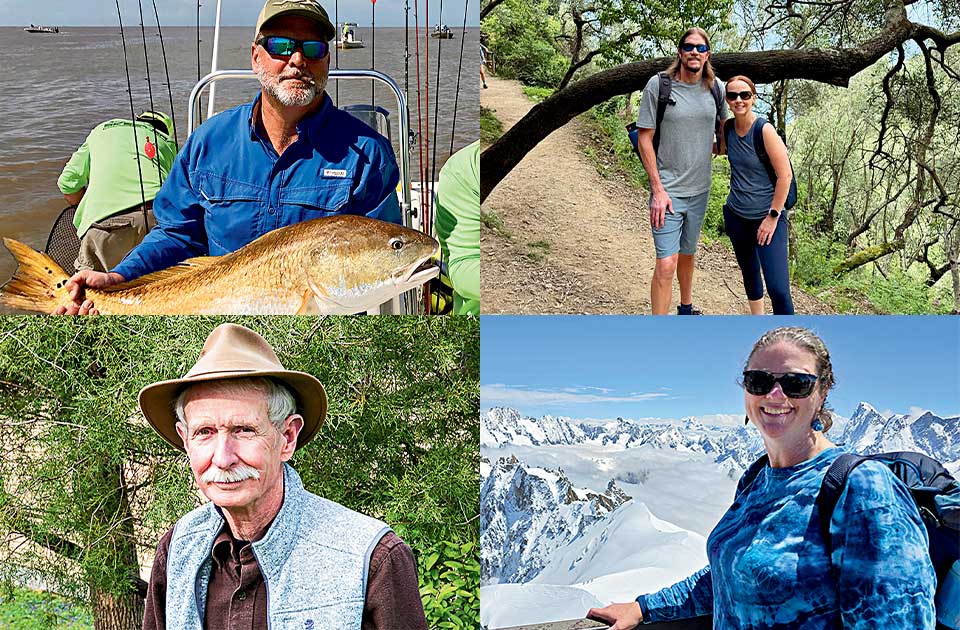
Clockwise from top left: Lew Carpenter (photo courtesy of Lew Carpenter), Garrit Voggesser (photo courtesy of Garrit Voggesser), April Waltz (photo courtesy of April Waltz), Martin Kemper (photo courtesy of Martin Kemper)
Celebrating Extraordinary Work
At the National Wildlife Federation’s Annual Meeting on June 4 in Minneapolis, NWF staff and affiliates gathered to honor the recipients of the 2025 National Conservation Achievement Awards.
Kent Salazar Director of Conservation Partnerships Award: Lew Carpenter (above, top left), director of conservation partnerships for NWF’s Rocky Mountain region, supports five affiliates and convenes them on hunting and angling issues.
Charlie Shaw Conservation Partnership Award, Affiliate: John Bradley, the executive director of NWF affiliate North Dakota Wildlife Federation, brings together hunters, anglers, Indigenous groups and other partners to protect the state’s wildlife and landscapes, including the proposed Maah Daah Hey National Monument.
Charlie Shaw Conservation Partnership Award, Staff: As senior director of Tribal partnerships and policy at NWF, Garrit Voggesser (above, top right, with his wife) works on efforts such as buffalo reintroduction and wildlife corridors. He also played a key role in developing NWF’s Tribal and Indigenous Partnership Enhancement Strategy, a blueprint for forming authentic relationships with Indigenous communities.
Affiliate of the Year Award: Read more about Planning and Conservation League in “Planning for California’s Future,” below.
Young Leader Awards: Read more about Isobel Lingenfelter and Skyler Nix.
Conservation Leadership Award: During her 25-year tenure as Outdoor Classroom coordinator at NWF affiliate Alabama Wildlife Federation, April Waltz (above, bottom right) has collaborated with K-12 schools to design, budget for and build wildlife habitats on their campuses.
Volunteer of the Year Award: Marty Kemper (above, bottom left) is an ecologist and volunteer with Illinois affiliate Prairie Rivers Network. Kemper has worked on herbicide drift for the past eight years, co-authoring three reports on the subject.
Planning for California’s Future
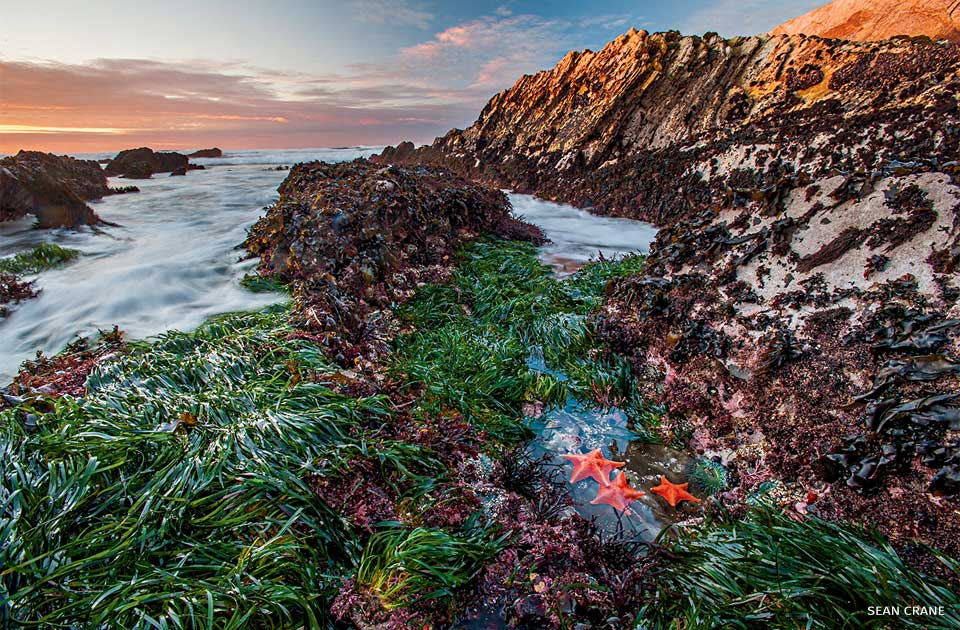
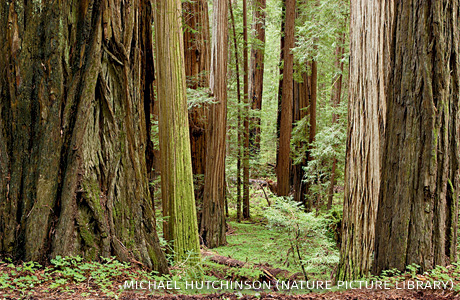
NWF named California’s Planning and Conservation League (PCL) its Affiliate of the Year at the National Conservation Achievement Awards in June. Founded in 1965, PCL has helped lead California’s environmental policy and protection of the state’s landscapes, from coast (Montaña de Oro State Park, above) to forest (Humboldt Redwoods State Park, below) to desert, for 60 years.
“Because [the founders] were all attorneys, they really felt that better planning [would address] the root of the problem,” says Howard Penn, executive director of PCL. “PCL was one of the first statewide environmental organizations busing people up from L.A. to have lobby days at the capitol in Sacramento.”
In 1970, PCL co-founder David Hirsch helped draft California’s premier environmental law, the California Environmental Quality Act (CEQA), which requires land-use projects to include environmental impact assessments and invites the public to weigh in on those projects.
Since then, PCL also has been instrumental in the passage of hundreds of bills addressing critical issues in California, from legislation that raised fines for not adhering to water curtailments to requiring utility companies to use renewable energy for 50 percent of their output by 2030.
“Our main driving principle is [that] how we live and where we live really dictate the outcome of challenges with the environment,” says Penn. “The root of many environmental problems and solving them is simple: where we build, how we build, transportation and land-use planning processes.”
Early each year PCL hosts an assembly where its more than 100 member organizations and the public convene on priorities for the coming year. Members lend PCL staff insight into local issues and in turn provide guidance to smaller organizations. In September, PCL also hosted an anniversary gala to celebrate 60 years of hard work and conservation success.
From our Donors | Lisa Somerson of Waxhaw, North Carolina
WHY I GIVE “I care about wildlife because I understand that there would be no humans without wildlife. I realize we are all dependent on each other in order to have a healthy, sustainable life.”
Interested in learning more about the impact you can have on wildlife? Please visit nwf.org/donate.
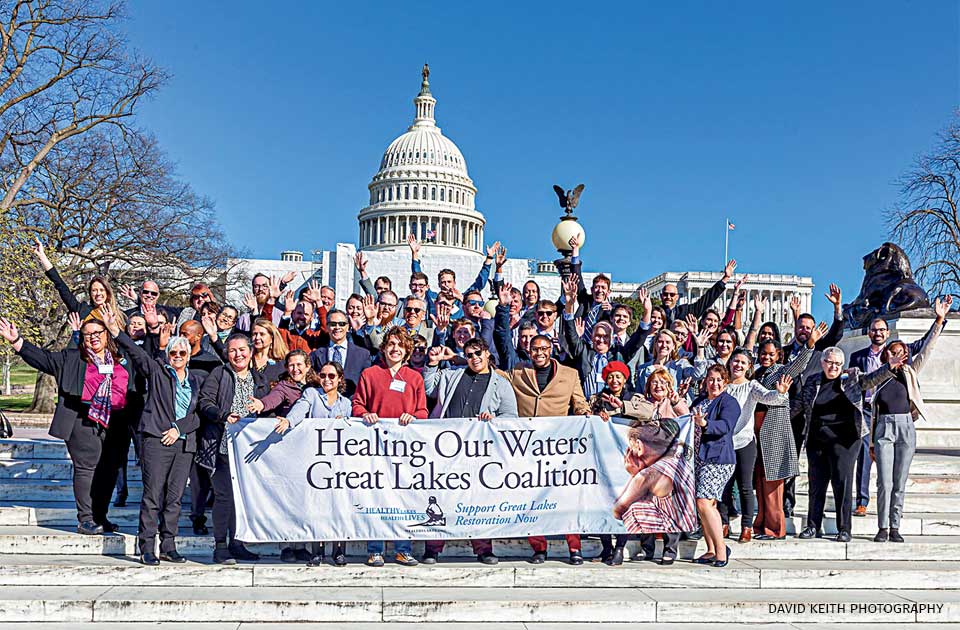
Two Decades of Healing Our Waters
The Healing Our Waters–Great Lakes Coalition celebrates two decades of restoring and protecting the Great Lakes this year. Formed in 2005, the coalition—which is co-managed by NWF and the National Parks Conservation Association—advocates for federal funding and policy to safeguard the world’s largest freshwater ecosystem.
“In the early 2000s, activists, academics and philanthropists got together to talk about how to secure federal funding to restore and protect the Great Lakes,” says Laura Rubin, director of Healing Our Waters. “A lot of money was going to the Chesapeake and Everglades, and the Great Lakes weren’t receiving any significant federal funds. We got feedback that there wasn’t a unified voice out of the region.”
In response, coalition members worked with scientists to develop a report titled Prescription for Great Lakes Ecosystem Protection and Restoration, which described the need for investment and outlined threats to the region—including contaminated sediment and loss of wetlands—as well as methods to combat them.
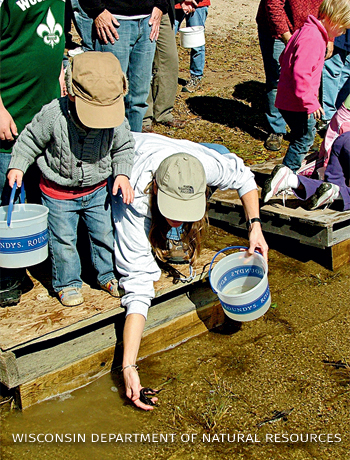
The federal government heeded the call to action, and in 2009 the Obama administration created the Great Lakes Restoration Initiative, which allocated $475 million that year to the Environmental Protection Agency to address concerns in the report. Since then, the coalition has advocated (including at the Capitol in Washington, D.C., top) for continued annual investment—with a total of $6 billion allocated to date for habitat restoration, nutrient pollution reduction, reintroducing native species (lake sturgeon in Wisconsin, inset) and more. The coalition also has been able to secure dedicated funding in the current federal budget, when many conservation programs are being cut.
Now with more than 200 member organizations, the coalition has a wide pool of national knowledge and local expertise to tap.
“Some groups lean more into wildlife and habitat; some lean into water affordability and stormwater issues. We hold the place where everyone is working for Great Lakes protection,” Rubin says. “For us to have been around as long as we have has required that special sauce.”
Bulletin
National Wildlife Photo Contest
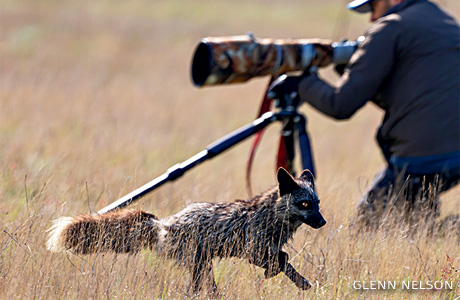
The winners of the 2025 National Wildlife® Photo Contest will be published in our upcoming winter issue, and the 2026 contest will open for submissions in January. Learn how you can enter your photos.
More from National Wildlife magazine and the National Wildlife Federation:
Get to Know NWF’s 2025 Young Leader Award Winners »
Water Water Everywhere: Restoring the Ohio River Basin »
Catch Up on Previous NWF News »