Hawaiian Birds are Stealing from Each Other’s Nests
Plus, a possible ant species akin to cleaner fish, the wildlife trade effect on zoonotic diseases and more science news
- By Laura Tangley
- Wildlife Science
- Sep 23, 2026
Branch Bandits Beleaguer Hawaiian Birds
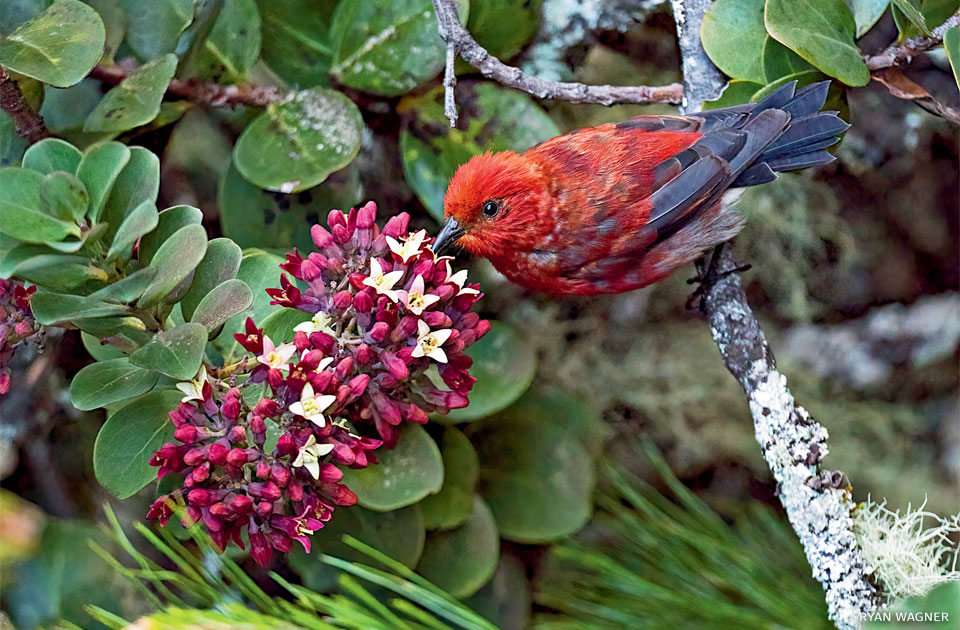
In the high mountain forests of Hawai‘i, colorful native songbirds are in trouble, with many populations declining due to habitat loss, climate change, invasive species and avian malaria spread by nonnative mosquitoes. Now researchers at the University of California, Riverside, have discovered another, somewhat surprising, threat. In a study published in The American Naturalist, they report that several native canopy birds, including the ‘apapane (above), ‘i‘iwi and Hawai‘i ‘amakihi, are stealing twigs and moss from one another’s nests, a behavior known as kleptoparasitism. While many pilfered nests had been abandoned by their original tenants, at least 10 percent of all thefts were from active nests still containing eggs or chicks. Of those nests, approximately 5 percent failed, “either because the nest structure was compromised or because the parents were disturbed and left,” says lead author Erin Wilson Rankin. Such percentages may seem insignificant, the scientists say, but in species already facing multiple threats, even small losses can accelerate declines. “If we can predict when and where this behavior happens, we might not be able to stop it, but we can intervene in other ways to support at-risk species,” Wilson Rankin says.
A New Species of ‘Cleaner Ant’?
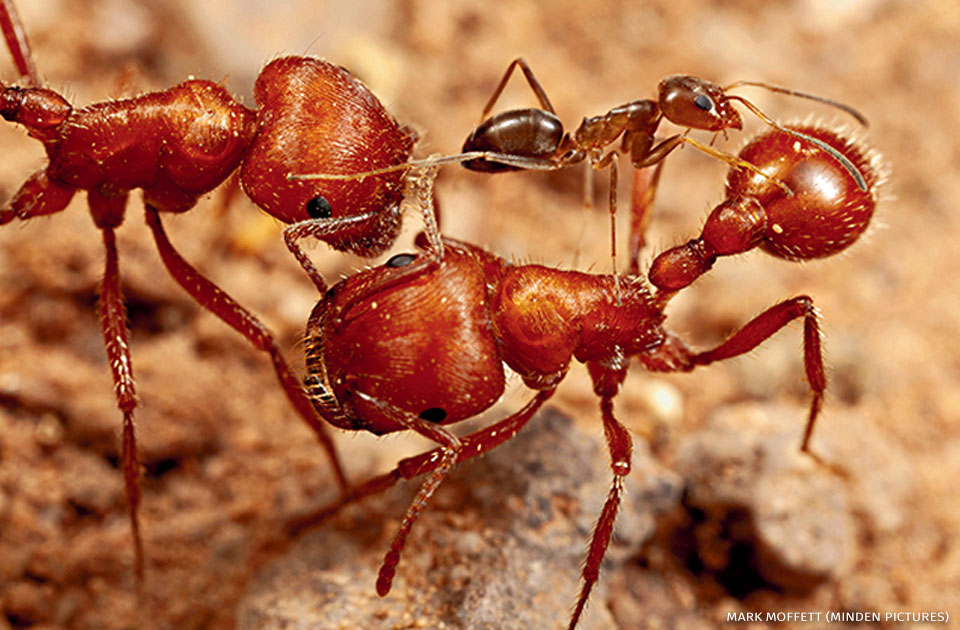
Divers who visit coral reefs often become familiar with “cleaner fish”: diminutive species, especially wrasses, that routinely remove parasites from larger fish. The relationship is beneficial to both. Cleaner fish consume the organisms they pluck, while big fish rid themselves of pesky and potentially harmful parasites. Now Mark Moffett, an entomologist with the National Museum of Natural History, reports what he believes could be a similar relationship between two ant species. Conducting research in mesquite deserts near Portal, Arizona, two decades ago, Moffett, also a professional photographer, observed and photographed cone ants of a still-undescribed species in the genus Dorymyrmex licking and nibbling on much larger red harvester ants (above), with the bigger ants both initiating and facilitating the interactions. Over five days, Moffett photographed some 90 such encounters, only recently analyzing what his camera had captured. After poring over hundreds of the images, “I became increasingly convinced that this Dorymyrmex was the first recorded ‘cleaner ant,’ ” he writes in the journal Ecology and Evolution. “In a world where most ants steal, fight, and outmaneuver one another, it seems that two species in an Arizona desert leave room for an unexpected collaboration.”
Wildlife Trade Spurs Pathogen Spillover
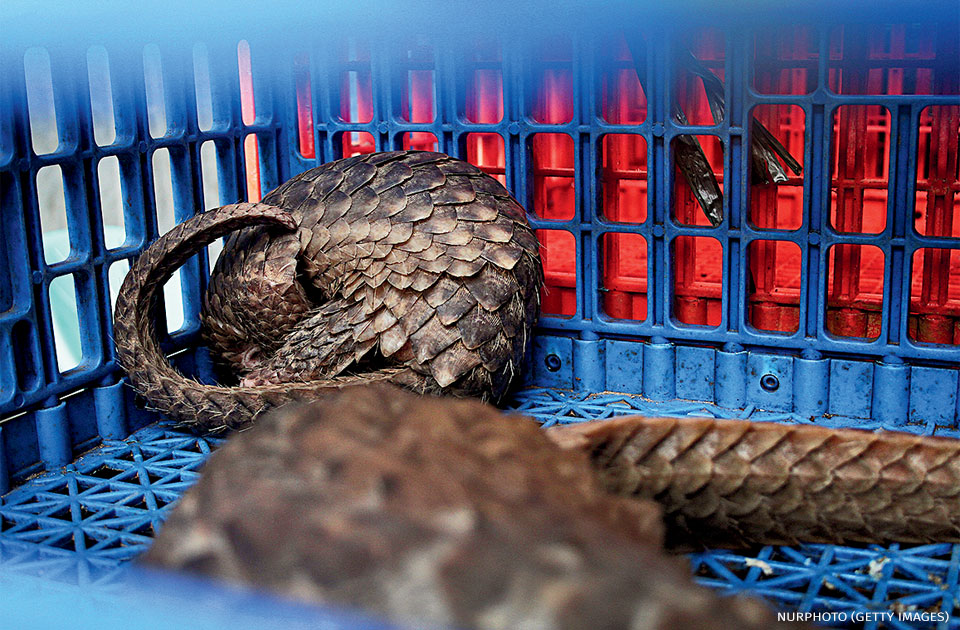
From plague, Ebola and SARS to HIV and, most likely, COVID-19, dangerous diseases that jumped from animals to people have afflicted humankind throughout history. Many such zoonotic diseases have been linked to buying and selling wild animals or their parts. Recently, an international team of scientists analyzed 40 years of data on the global wildlife trade to quantify the risk. In a study published in Science, they report that of 2,079 traded mammal species (including pangolins, above), 41 percent share at least one pathogen with humans while less than 7 percent of nontraded mammal species do. And the longer a species has been traded—either legally or illegally—the more likely it is to carry pathogens that can infect people. “On average, a wild mammal species shares one additional pathogen with humans for every 10 years it is present in the global wildlife trade,” the researchers write.
Microscope
Overlooked Invertebrates
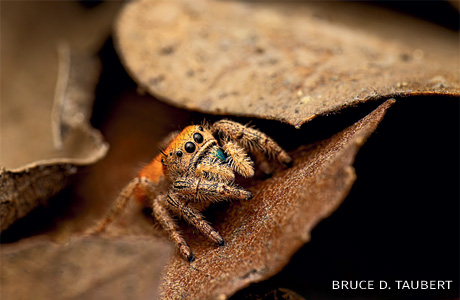
Despite their vital roles, the conservation status of 88.5 percent of U.S. insect and arachnid species (jumping spider, pictured) is unknown, University of Massachusetts Amherst scientists report in Proceedings of the National Academy of Sciences.
More from National Wildlife magazine and the National Wildlife Federation:
How Hula Is Shifting Alongside Hawai‘i’s Endangered Species »
Pangolins: Too Prized to Survive? »
New in Wildlife Science: Mosquitoes’ Growing Taste for Human Blood »