Is Synthetic Biology Worth the Risk?
Some say using synthetic biology to change the DNA of plants and animals could help species survive threats. Others say the technology is far too dicey.
- By Barry Yeoman
- Conservation
- Sep 23, 2026
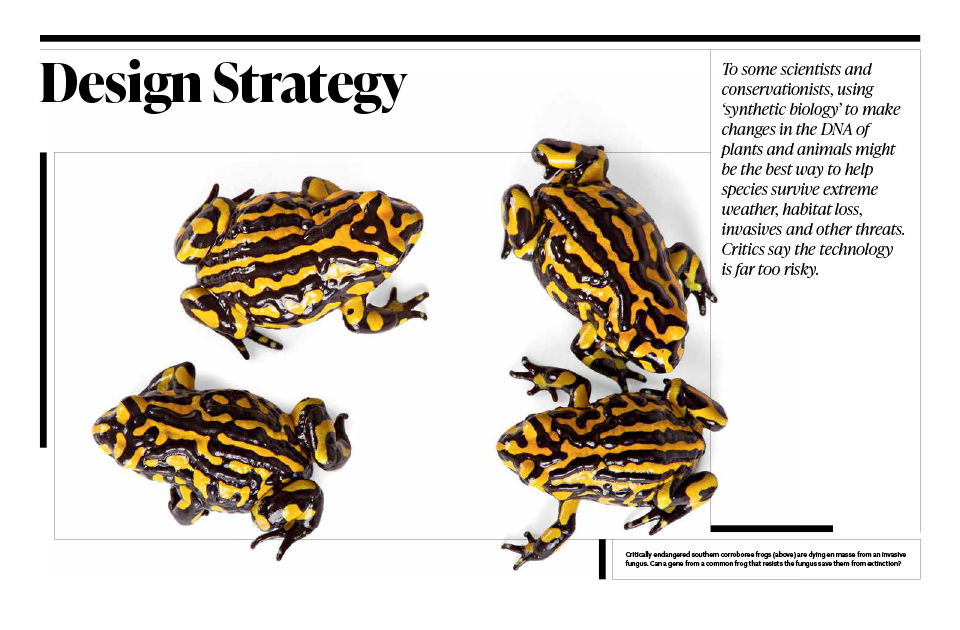
Critically endangered southern corroboree frogs (above) are dying en masse from an invasive fungus. Can a gene from a common frog that resists the fungus save them from extinction? (Photo by ©Joel Sartore/Photo Ark)
WHEN PATRICK BUERGER TALKS ABOUT THE CORAL HE STUDIES, you can’t help but marvel that such simple, immobile creatures have found such an ingenious way to survive.
“They’re solar-powered animals,” says Buerger, a molecular biologist at Australia’s Macquarie University. The corals lend their tissues as shelter to photosynthetic single-celled organisms, called zooxanthellae, that convert sunlight into nutrients like sugar. Those nutrients feed the corals, which in turn feed the zooxanthellae—a virtuous cycle that anchors the living, teeming structures called reefs.
Coral reefs often get compared to rainforests for their biodiversity. They cover only about 1 percent of the seafloor, and yet 25 percent of marine species rely on them. The largest, Australia’s Great Barrier Reef, supports whales and sharks, striking fish like Māori wrasses, and giant clams that exceed 400 pounds and live to 100 years.
But climate change is imperiling coral populations, which can coexist with zooxanthellae only within a narrow temperature range, ideally 73 to 84 degrees F. When it gets too hot (or cold), coral expel the colorful zooxanthellae, which starves the coral and exposes their white skeletons. This phenomenon is known as coral bleaching—and it is decimating coral reefs worldwide.
Buerger is on a quest to save corals and the ecosystems they support, a mission that’s led him into one of the most contested fields of conservation science. The field is called “synthetic biology”: a set of cutting-edge technologies, including genetic engineering, used to redesign living organisms to make them better suited, or more useful, to the altered world we have created. Sometimes this means editing the genes of one species into the DNA of another.
Buerger and his colleagues, for example, have been looking into genes and mechanisms that other species use to thrive in extreme conditions. These include bacteria that live in hot springs; cacti that grow in the desert sun; and eight-legged tardigrades, each the size of a grain of salt and capable of living in polar climates, boiling alcohol and even outer space. “Can we use some of their genes that they have evolved over millions of years?” he wonders.
For Buerger, it’s too early to know exactly how synthetic biology might help save coral populations: what’s safe, what’s scalable and how these tools fit into a broader conservation strategy. But his quest has grown more urgent as extreme temperatures have made bleaching more common. The most recent global bleaching event, from 2023 to 2025 and the largest to date, affected more than 80 percent of the world’s coral reef area. Though reefs can survive moderate short-term bleaching, prolonged or extreme events often kill them completely.
With climate change intensifying, Buerger believes that now is the time to advance synthetic biology research. But he also knows that he’s bound to get pushback.

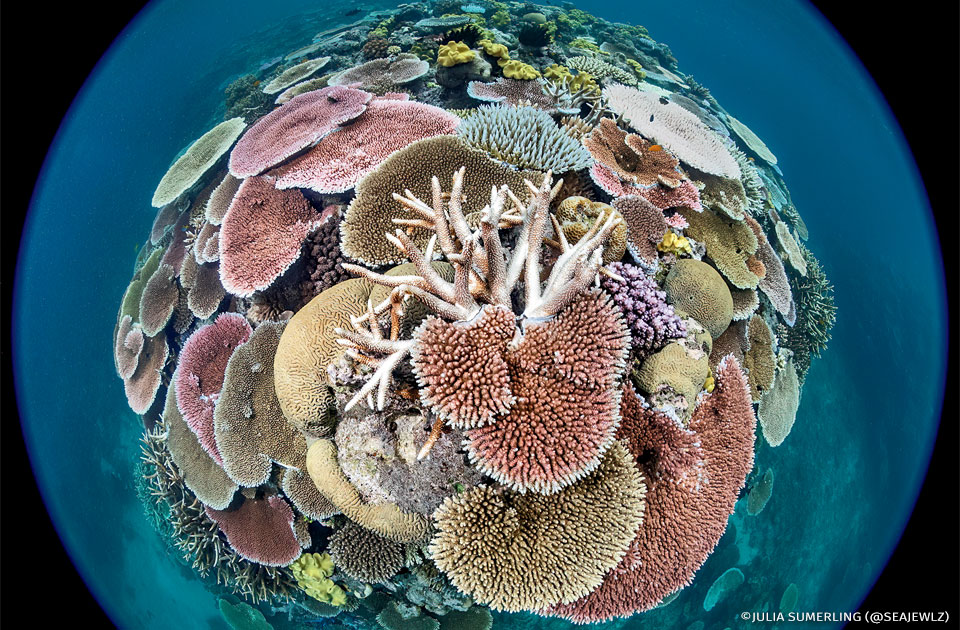
As ocean temperatures rise, coral reefs in Australia (pictured) and worldwide have been decimated by coral bleaching. Scientists hope that species adapted to extreme conditions might yield genes to help reefs survive.
Research ramps up
Synthetic biology already has made significant advances in agriculture, public health and manufacturing. Mosquitoes are being reengineered in hopes of slowing the spread of malaria. Scientists are altering the DNA of cover crops to make them less tasty to insects. A New Jersey company has engineered collagen-producing yeast to “biofabricate” a leather alternative.
The technologies’ use in biodiversity conservation is a newer idea, and one that offers hope to some scientists, even if most real-world applications remain years away. To believers, making precise changes in a species’ DNA could help wildlife survive on a planet battered by extreme weather, habitat loss and invasive species. “We are in a crisis of our own creation—we as humans—and therefore we need to solve the problems using our brains and our technology,” says Susan Lieberman, vice president of international policy at the Wildlife Conservation Society. “We don’t have the luxury of saying: ‘We’re not going to use anything modern. Let’s use what worked in 1950.’ ”
That sense of urgency has animated research around the world. At the State University of New York College of Environmental Science and Forestry, scientists in 2012 inserted a wheat gene into American chestnut trees in the hopes of engineering trees that can survive chestnut blight, a disease caused by an invasive fungus that typically kills down to the stump. Chestnut forests once fed animals from insects to bears as well as Indigenous Peoples from Maine to Mississippi. But starting about 120 years ago, the blight tore through eastern woodlands and destroyed the majority of large, healthy trees. Most remaining wild chestnuts are stunted shrubs, says Andrew Newhouse, director of the college’s American Chestnut Research and Restoration Project.
Newhouse and his colleagues are testing chestnuts containing the wheat gene in fields isolated from natural forests. His eventual goal is to cross them with remnant chestnuts and reintroduce the trees to the wild, restoring a species that looms large in the national imagination. This will require permission from multiple federal agencies, and Newhouse says he doesn’t know how long the regulatory review will take.
In the Great Plains, scientists are exploring whether synthetic biology can help save the black-footed ferret. Members of the weasel family, wild ferrets were driven almost to extinction in the 20th century by a confluence of factors, including habitat loss; eradication of their primary food source, the prairie dog; and a flea-borne bacterial disease called sylvatic plague. (It’s the same plague that caused Black Death in the 14th century.) Ferrets were reintroduced to the wild in 1991 but continue to fall victim to plague, a significant threat to their recovery. Though a vaccine exists, it requires capturing every ferret and immunizing it individually, an expensive and time-consuming process.
But what if we could manipulate the ferret’s DNA to make this catch-and-immunize approach unnecessary? Researchers are working to develop a “genetic vaccine” that would activate inside a ferret’s body when it reached a certain age, triggering an immune response.
“And when it has babies, they vaccinate themselves,” says conservation biotechnologist Ben Novak of Revive & Restore, a California nonprofit that works with several partners on a black-footed ferret genetic rescue project. Novak hopes to test vaccine candidates on domestic ferrets as early as 2027.
Halfway around the world, conservation biologist Tiffany Kosch is studying another wildlife population suffering a fatal disease: southern corroboree frogs, which have bold yellow-and-black stripes and live in the mountains of Australia. Since the 1980s, the rotund little amphibians have been dying en masse from an invasive fungus called chytrid. They are now considered functionally extinct in the wild.
Hoping to save the species, Kosch, a research fellow at the University of Melbourne, worked with colleagues internationally to sequence the frog’s genome. They published the species’ genetic blueprint—three times the size of the human genome—in 2025 in Wellcome Open Research.
Kosch plans to take two approaches to creating chytrid-resistant frogs. She will try selective breeding: crossing frogs that possess genes linked to immunity, much like we breed animals or plants to improve food production. She calls this less precise than genetic engineering, and it could have unexpected consequences. A frog bred to resist the fungus also could prove less afraid of predators, for example.
That’s why Kosch also is looking at synthetic biology—perhaps editing in a gene from the common eastern froglet, which lives nearby but doesn’t appear to get sick from the fungus. “Genetic engineering is a great approach, because it’s very targeted,” she says. But it is not foolproof, she adds. Editing one or more genes related to disease susceptibility could make frogs more likely to get another disease. That’s why Kosch favors a slow approach. She predicts it will take another 10 to 20 years before scientists even consider releasing an engineered chytrid-resistant frog into the wild.
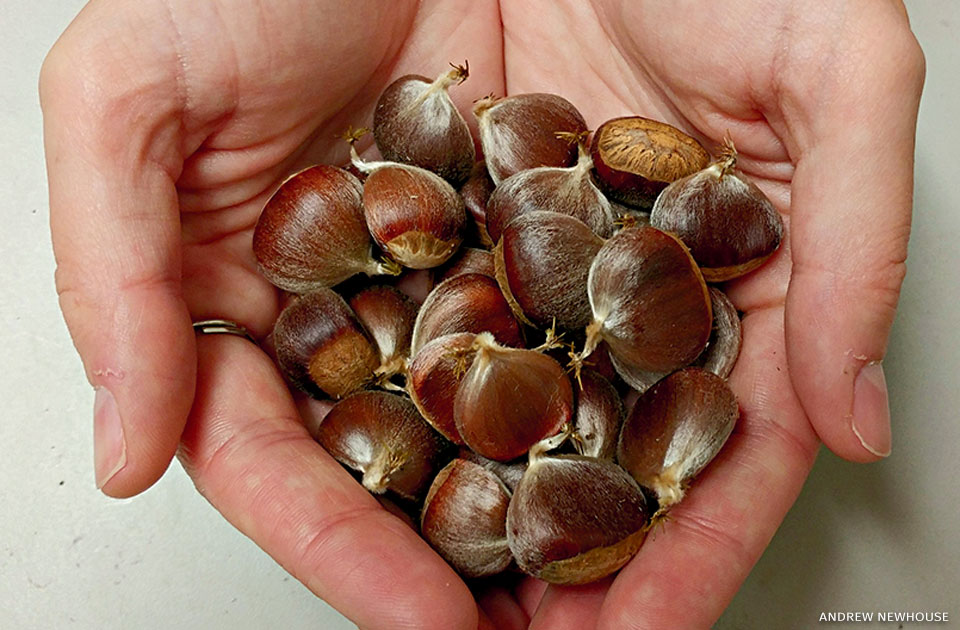
To try and save the American chestnut, researchers plan to test genetically modified trees crossed with wild chestnuts (seeds, pictured).
Pushback from critics
Using synthetic biology to advance biodiversity conservation has sparked resistance from some scientists and conservationists who consider the new technologies unpredictable and risky. Once an organism is released into nature—intentionally or otherwise—any unintended consequences of changes to its DNA would be irreversible, they say.
“We need to slow down,” says Dana Perls, senior food and technology program manager at the nonprofit Friends of the Earth. “At a time where we’re already losing biodiversity at a rapid pace, [and] climate chaos is changing lives, environments, species, we can’t afford to be experimenting with nature—particularly using technology that we barely understand. There’s barely data to suggest this wouldn’t go wildly wrong.”
Some opponents have focused on the chestnut project, which is further along than others. “The American chestnut has a lifespan of well over 200 years,” says Anne Petermann, executive director of the Global Justice Ecology Project, an environmental and human rights organization. “They’re saying that after a [short] field trial in a controlled environment, they know what these trees will do in the wild for decades if not centuries. That’s ridiculous. They don’t know how the genes will pass to future generations. They don’t know if they will eventually be silenced,” making the trees again susceptible to blight. “They just don’t know.”
Petermann and others also have argued that the chestnut “juggernaut” includes businesses motivated by profit rather than conservation. “If genetic engineering could return to North America one of its most beloved trees, perhaps the public might find other modifications more palatable,” she wrote in Earth Island Journal in 2025. “Greater public support would open the door to ever more modifications, with the potential to increase the production and profitability of timber, pulp and even biofuels.”
The company Duke Energy, for example, has funded transgenic chestnut research with hopes of growing the trees on former coal-mining sites in Appalachia. In addition to feeding wildlife and absorbing carbon, the utility said in 2012, the trees might “one day provide high-quality lumber [and] biomass fuel for electric generation.”
The debate over synthetic biology reached the global stage in October 2025, when the International Union for Conservation of Nature (IUCN) held its quadrennial world congress in Abu Dhabi. There, groups from seven countries proposed a moratorium on the release of genetically engineered organisms—which are not bound by state borders—into the wild. “Some people say, ‘Oh, you’re anti-science,’ ” says Perls, who supported the moratorium. “No, we’re very pro-science. We want to understand more about what is being proposed, not less.” Their proposal failed by one vote.
IUCN did adopt, by an overwhelming majority, its first global policy on synthetic biology and conservation. It called for government agencies and private organizations to make decisions whether to pursue a particular use of the technology on a case-by-case basis with safeguards in place. IUCN votes don’t bind its members, but they carry a lot of weight.
Boosters celebrated both votes and promised to press forward. “We still want to make sure that we’re not creating headwinds that will slow technological development as we continue to watch biodiversity decline,” says Matt James, chief animal officer at the Dallas-based, for-profit company Colossal Biosciences. “We’re pushing for more action, more development of tools today to save nature.”
Colossal, which calls itself a “de-extinction company,” made headlines in April 2025 when it announced the birth of three pups it claimed were dire wolves, extinct canids that roamed the Americas until about 13,000 years ago. The species likely went extinct after its primary food sources—large herbivores like bison and camels—declined or disappeared. The TV series “Game of Thrones” resurrected the species in the popular imagination.
“For the first time in human history, Colossal successfully restored a once-eradicated species,” the company boasted at the time. “Our team is proud to return the dire wolf to its rightful place in the ecosystem.”
To develop the pups, Colossal’s scientists started with gray wolf cells and then edited 14 genes, based on their study of DNA from two dire wolf fossils. The edits produced larger wolves with thick white fur, powerful legs and shoulders, and distinct vocalizations. They now live on what the company calls a “semi-wild” private preserve in an undisclosed location in the northern United States. Because they would compete with gray wolves, which are protected under the Endangered Species Act, they can never be reintroduced to the wild.
Skeptics point out that the pups were not actually dire wolves but rather someone’s best approximation of what the species might have looked and sounded like. Vincent Lynch, an evolutionary biologist at the University at Buffalo, worries that the prospect of de-extinction—no matter how superficial—will make it feel less critical to protect wildlife in the first place.
“The Endangered Species Act is endangered,” Lynch says, because politicians can say: “ ‘If a species goes extinct, who cares? We can just bring it back.’ ”
That tracks how U.S. Interior Secretary Doug Burgum responded to Colossal’s dire wolf announcement. “It’s time to fundamentally change how we think about species conservation,” the cabinet official posted on X. “The marvel of ‘de-extinction’ technology can help forge a future where populations are never at risk.”
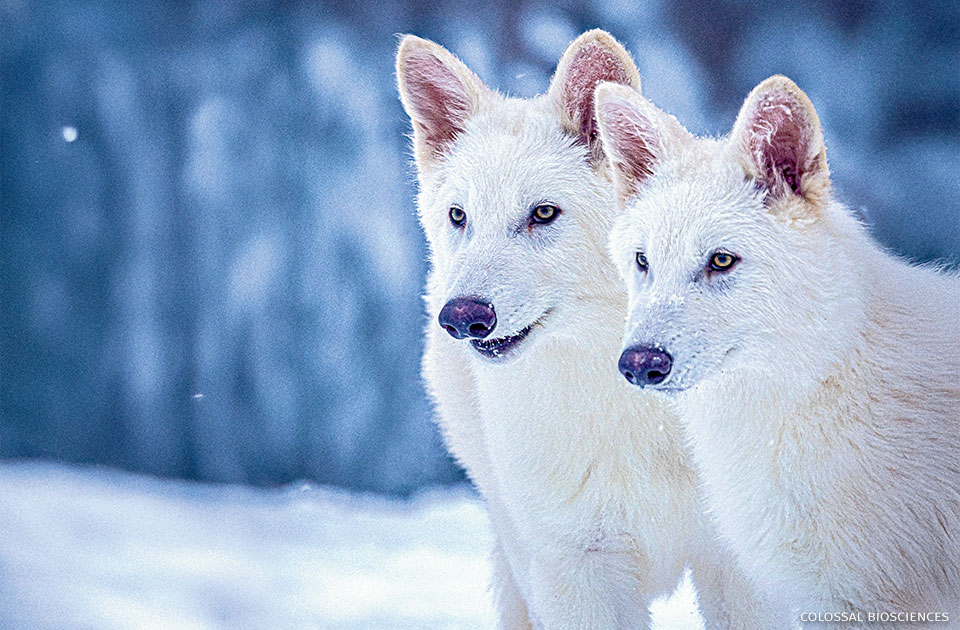
After editing 14 gray wolf genes, a private company claimed to have recreated the extinct dire wolf. Critics point out that the resulting animals (pictured) are not truly dire wolves but a best guess at what they looked and sounded like. Others say that the prospect of “de-extinction” makes the goal of protecting species feel less critical.
Buying time to save biodiversity
Supporters of synthetic biology do not consider it a panacea. For coral reefs, “the highest priority needs to be addressing climate change,” says Buerger. “If we don’t do that, everything else is just lost effort.”
But he also considers it critical to preserve biodiversity as we do the hard work of decarbonizing—a target looking more distant in today’s political climate. Synthetic biology could buy us time, he says: We don’t know the future, so we need to prepare by investing in the science today.
“If things go down the drain, there’s going to be a day someone knocks on our door and says: ‘Where’s the solution? What can genetics do?’ ” he says. “From my perspective, we need to start research now in order to make an impact in five or 10 years. … If we start the research in five or 10 years, it will be too late.”
Barry Yeoman is a journalist in Durham, North Carolina.
More from National Wildlife magazine and the National Wildlife Federation:
Zoonomia’s Genomics of Scale »
Photos: Fighting Chytrid in Frogs, One Bath at a Time »
The Brown Pelican Brief »
Blog: Devastated by Disease »