Whooping Cranes in Search of a Soft Place to Land
Whooping cranes—the rarest crane species—rely on the National Wildlife Refuge System and the Endangered Species Act, both of which have come under threat
- Text and photos by Michael Forsberg
- Conservation
- Sep 23, 2026
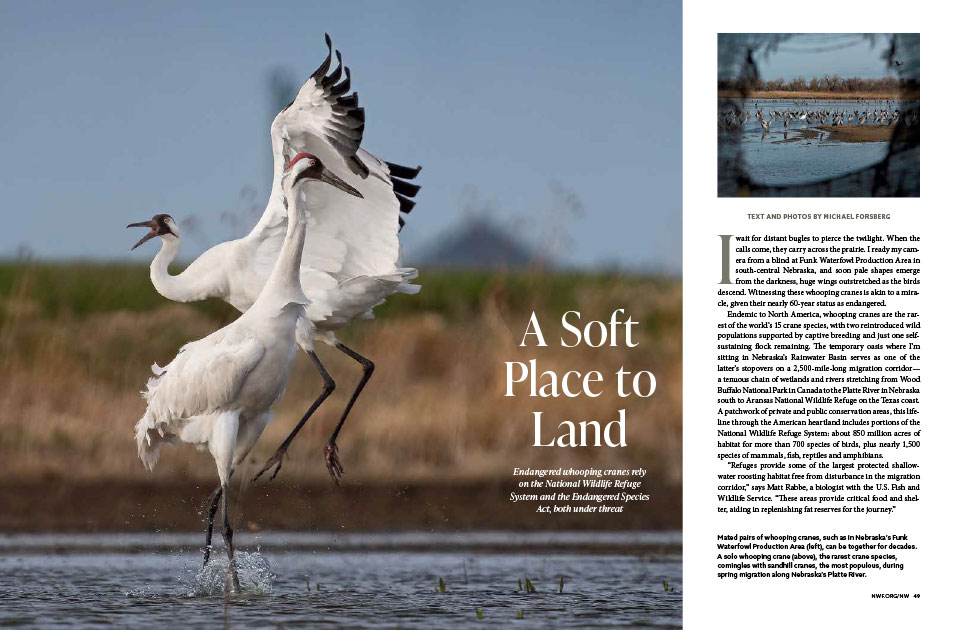
Mated pairs of whooping cranes, such as in Nebraska’s Funk Waterfowl Production Area (above), can be together for decades.
I WAIT FOR DISTANT BUGLES to pierce the twilight. When the calls come, they carry across the prairie. I ready my camera from a blind at Funk Waterfowl Production Area in south-central Nebraska, and soon pale shapes emerge from the darkness, huge wings outstretched as the birds descend. Witnessing these whooping cranes is akin to a miracle, given their nearly 60-year status as endangered.
Endemic to North America, whooping cranes are the rarest of the world’s 15 crane species, with two reintroduced wild populations supported by captive breeding and just one self-sustaining flock remaining. The temporary oasis where I’m sitting in Nebraska’s Rainwater Basin serves as one of the latter’s stopovers on a 2,500-mile-long migration corridor—a tenuous chain of wetlands and rivers stretching from Wood Buffalo National Park in Canada to the Platte River in Nebraska south to Aransas National Wildlife Refuge on the Texas coast. A patchwork of private and public conservation areas, this lifeline through the American heartland includes portions of the National Wildlife Refuge System: about 850 million acres of habitat for more than 700 species of birds, plus nearly 1,500 species of mammals, fish, reptiles and amphibians.
“Refuges provide some of the largest protected shallow-water roosting habitat free from disturbance in the migration corridor,” says Matt Rabbe, a biologist with the U.S. Fish and Wildlife Service. “These areas provide critical food and shelter, aiding in replenishing fat reserves for the journey.”
Rest and refueling stops are crucial for the migrating cranes. Still, the matrix is fragile. Wildlife refuges are in crisis from decades of congressional underfunding, with an additional 20-percent cut proposed for 2027. The challenges aren’t limited to budgeting. Intensive agriculture, concentrated energy development and degraded water systems press against a route the cranes trace twice a year.
“We have continued to lose grassland as well as temporary and seasonal wetland habitat in the Central Flyway,” says ecologist Andy Caven of the International Crane Foundation. In drought years, areas can become “functionally unavailable,” concentrating birds and increasing disease risk, with subtle shifts determining whether wetlands disappear.
Like their habitats, the birds are no strangers to threats. By the 1940s, migratory whooping cranes had dropped to 15 individuals from a high of some 10,000 before European settlement. Conservation efforts, including a listing under the Endangered Species Act, helped the self-sustaining migratory flock rebound to roughly 550 birds today.
And yet, those safeguards are in peril, with the Trump administration proposing a new “Waters of the United States” rule in late 2025 that will end protections for many of the areas the birds depend on. Then in July 2026, the administration removed habitat destruction from the Endangered Species Act’s definition of “harm,” meaning it is no longer considered unlawful to destroy habitat unless a protected species is injured or killed as a direct result of human action.
“The more clearly I see a world of diminishing wildlife habitat,” says Craig Thompson, the National Wildlife Federation-appointed board member of the nonprofit Crane Trust and a former NWF board chair, “the greater I see the task of maintaining wildlife migration corridors.” See more whooping crane photos in the slideshow below.
NWF Priority
Building Trust
Joint action by the National Wildlife Federation and the state of Nebraska in the 1970s protected critical habitat along the central Platte River, helping save whooping cranes from extinction and greatly expanding the sandhill crane population. The Crane Trust—established as a result of that action, with an NWF-appointed trustee on its board—has conserved over 10,000 acres along the Platte River for migrating cranes and waterbirds. Learn more.
-
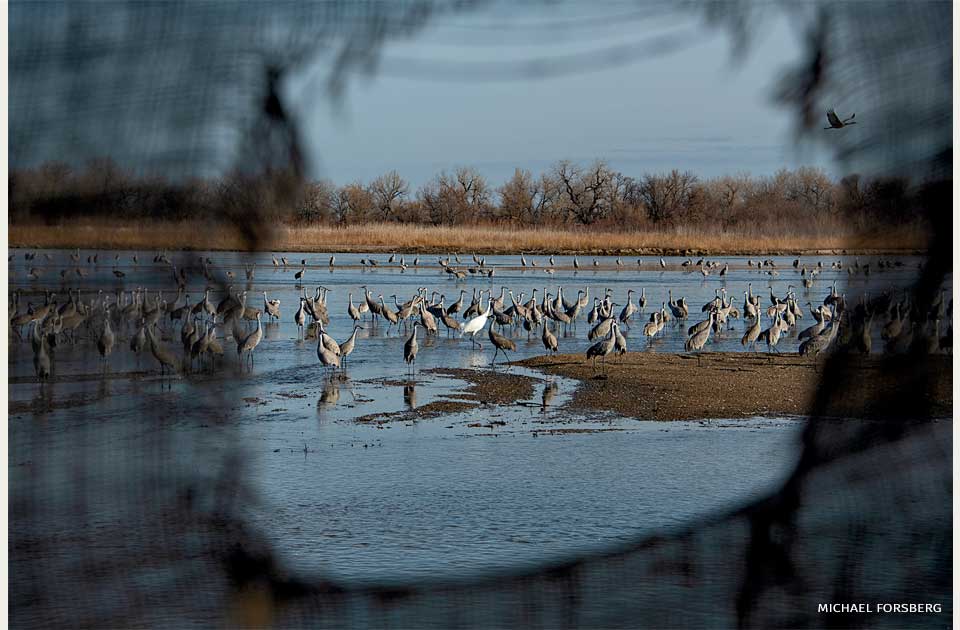
A solo whooping crane, the rarest crane species, comingles with sandhill cranes, the most populous, during spring migration along Nebraska’s Platte River.
-
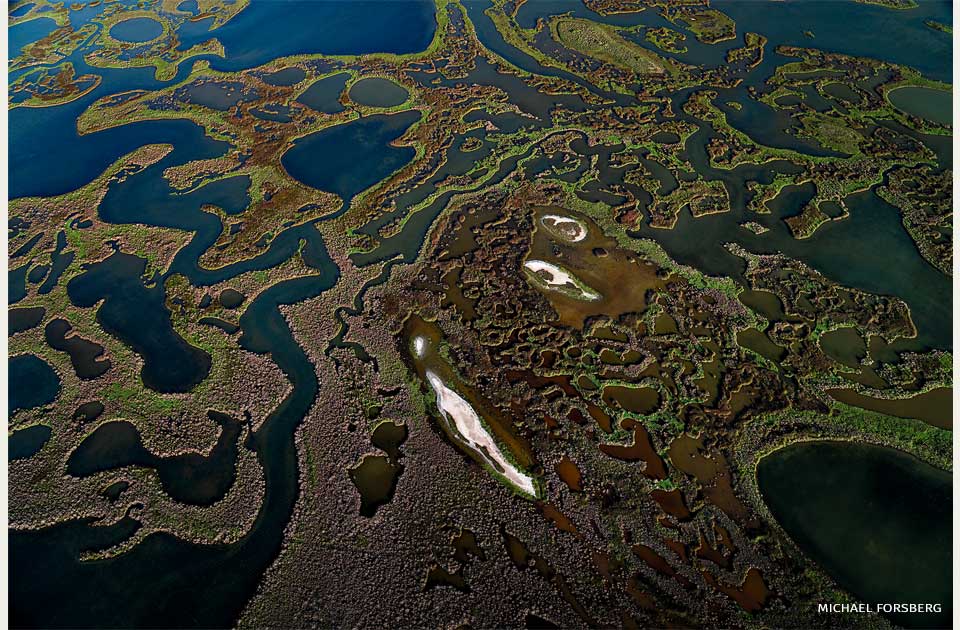
Vast salt marsh wetlands and estuaries at Aransas National Wildlife Refuge and surrounding private conservation lands provide a winter stronghold for whooping cranes on the Texas Gulf Coast.
-
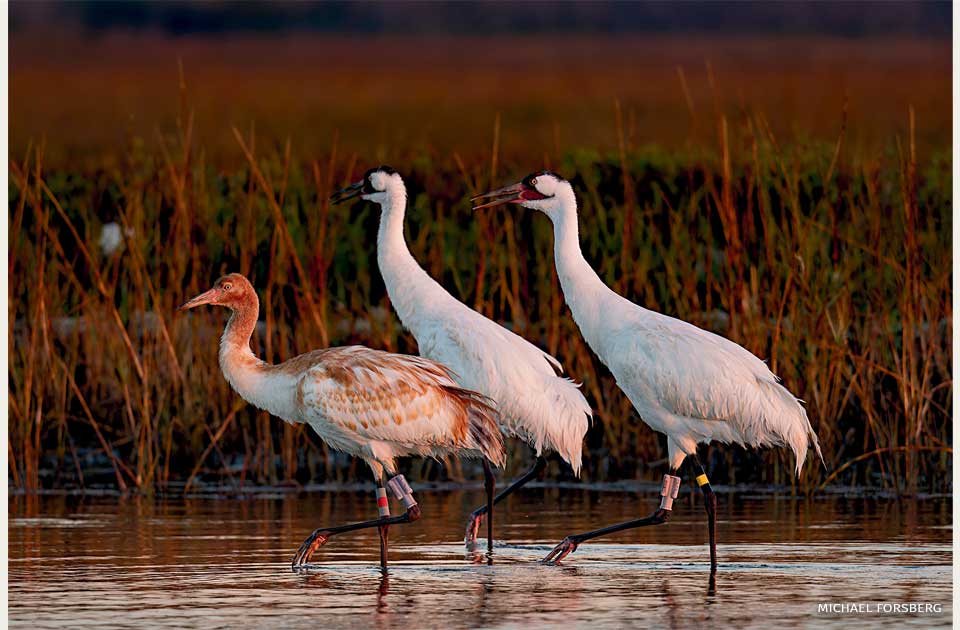
Young whooping cranes, like a cinnamon-colored juvenile in Texas (pictured), stay with their parents for their first year. GPS devices on the birds’ legs inform researchers of daily movements.
-
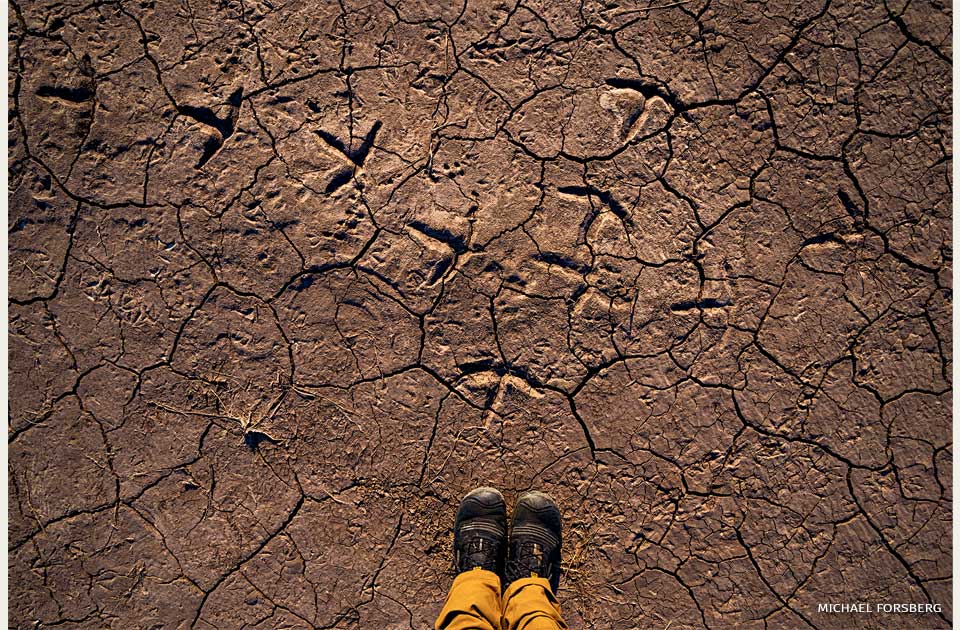
Tracks persist at Funk Waterfowl Production Area weeks after the migrating birds pass through the seasonal wetlands in April.
-
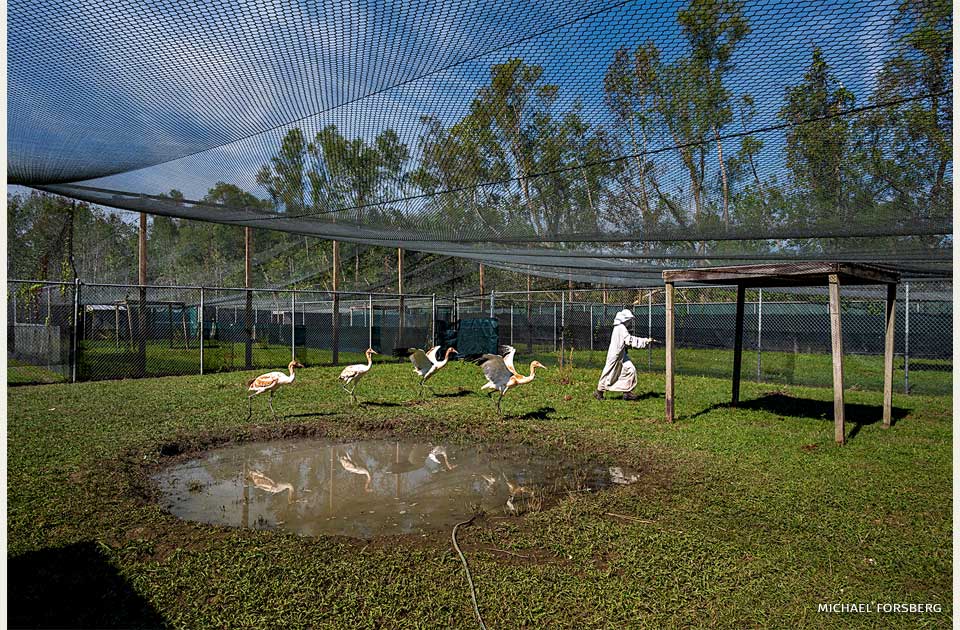
Young whooping cranes raised in human care participate in flight training at Freeport-McMoRan Audubon Species Survival Center in New Orleans before being released into Louisiana’s reintroduced nonmigratory population.
-
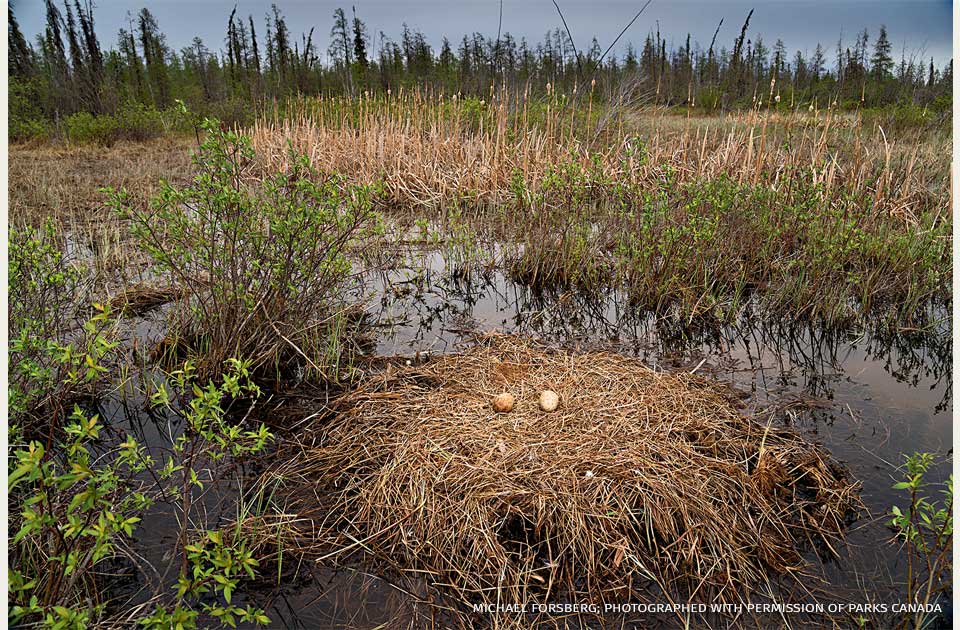
Whooping cranes reach sexual maturity around age 5 then usually lay two eggs, as in this nest in Canada’s Wood Buffalo National Park. Typically one chick, known as a colt, survives to fledge.
-
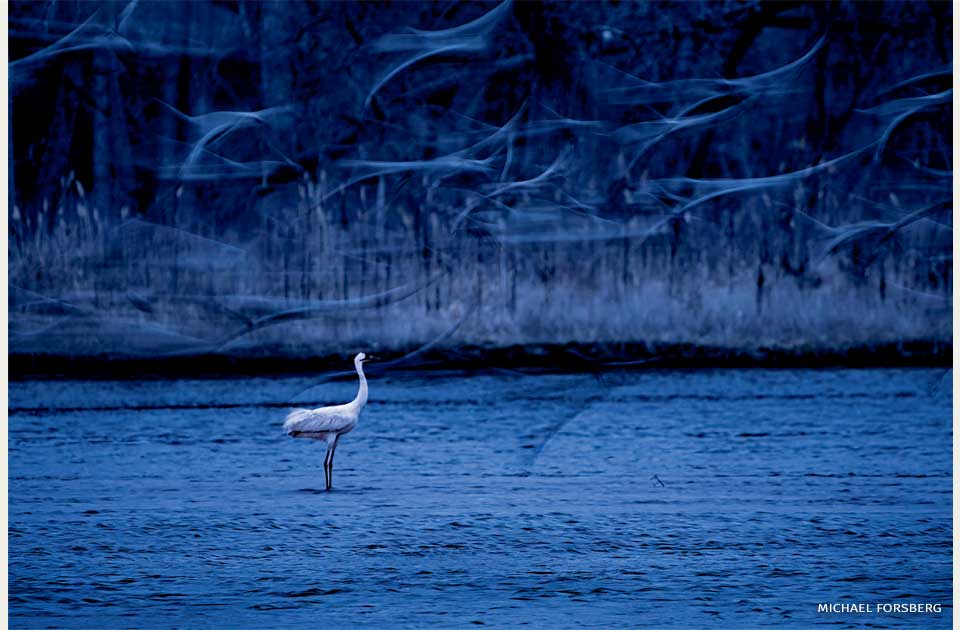
A whooping crane stands among sandhill cranes lifting off from a spring migratory roost at Platte River Prairies, in Nebraska.