Rodenticides' Collateral Damage
Each year rodenticides kill thousands of nontarget animals from dozens of wildlife species
- By Heidi Ridgley
- Conservation
- Jun 24, 2026
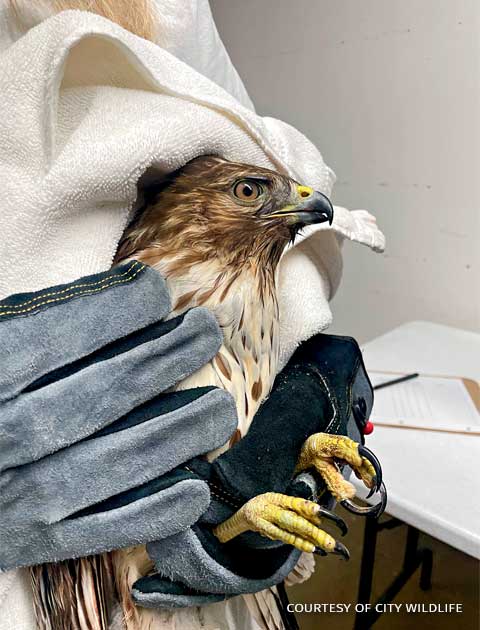
A veterinarian treats a poisoned red-shouldered hawk (above) that likely ate a rat (below) tainted by rodenticides. Aquatic species like river otters (bottom) can be impacted if rodenticides wash into water and contaminate fish the mammals eat.
“WATCH OUT. SHE’S GETTING RASCALLY,” says veterinarian Sarah Sirica, as she places an ailing red-shouldered hawk into a covered bin with astonishing ease. The bird is taking a quick trip to an adjacent hallway to get in flight time while her breakfast and medication are prepared.
When Sirica lifts the lid a few seconds later, the hawk flies up to a sawed-off tree limb wedged between two walls then swoops to the ground. She appears to glare at us through a window in the door, displaying her feathers like she’s modeling Dracula’s cape. “I like that she’s looking cranky,” Sirica says. “That’s a really good sign.”
Twelve days earlier, December 29, 2025, the bird arrived at City Wildlife, a rescue and rehabilitation center in Washington, D.C., covered in blood. Her injury was minor, but her blood wouldn’t clot for 40 minutes—a clear sign of rodenticide poisoning.
Introduced in the 1970s, today’s most commonly used rodenticides contain anticoagulants. Flavored to entice, these poisons are easy to purchase in stores and online. Once consumed, they cause animals to bleed to death internally.
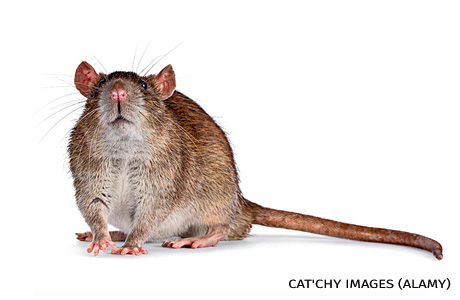
Their death can take up to two weeks. During that time, rats often become lethargic and disoriented, making them an easy catch for predators, from hawks and owls to foxes and bobcats. After death, the rodents become food for scavengers, including opossums, skunks, vultures and even box turtles.
That’s when the poisons, which don’t readily break down, pass into the tissue of other animals—at least 34 known wildlife species in California alone—and move throughout the food web. Every year, thousands of such nontarget animals bleed to death, either internally or from minor injuries.
Even when victims don’t die directly from the poison, scientists say, rodenticides can compromise wildlife immune systems, “making them more likely to have severe impacts from infectious diseases that exist naturally in the wild,” says Rebecca Gooley, a biologist and David H. Smith postdoctoral conservation research fellow. At a recent City Wildlife webinar, she cited results of a 16-year study in Ecotoxicology showing that California bobcats were over seven times likelier to have severe mange if exposed to two anticoagulants and four times more likely if exposed to just 0.05 ppm of any anticoagulant. One severe mange outbreak in bobcats “nearly wiped out that entire population, so we are seeing population-limiting impacts from rodenticides,” Gooley says.
The poisons don’t just affect small and midsize rodent-eating predators but also scavenging birds, such as vultures and condors, and larger carnivores, such as mountain lions and wolves, that eat the smaller predators. They’ve also turned up in slugs and insects that consume rat bait.
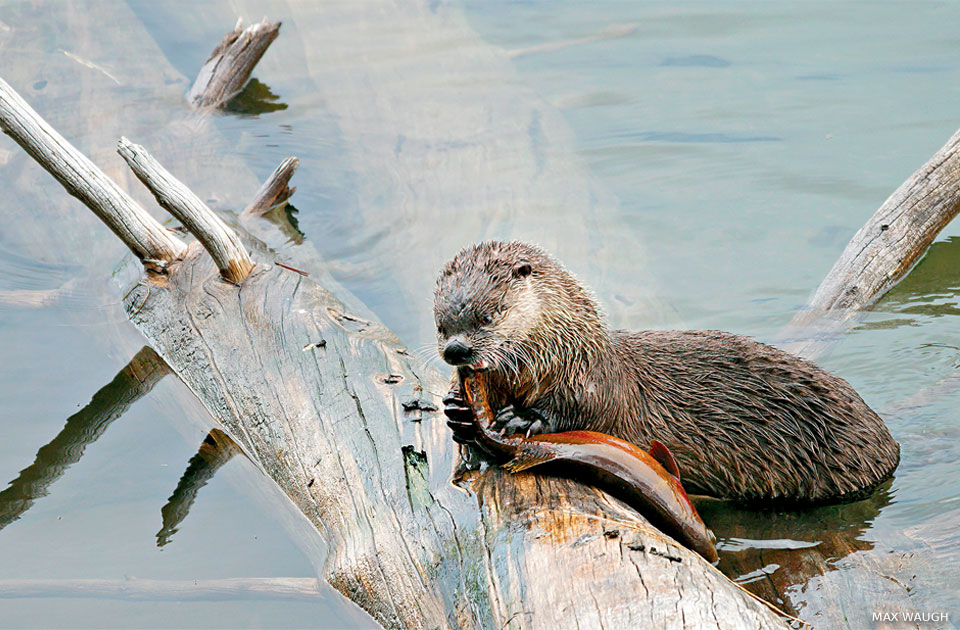
Rat poisons even affect water-dependent wildlife species such as frogs, cormorants and river otters. When placed in or near sewers, the compounds can wash directly into rivers and streams during rains, ending up in animals that eat fish and crustaceans.
Few dispute the need to control rats. Tens of millions of these nonnative rodents consume crops, contaminate food, spread disease and threaten native species. Yet decades of widespread rat poisoning have not eliminated them. In a 2025 study in Science Advances, Jonathan Richardson of the University of Richmond and colleagues conclude that rat populations are continuing to increase in urban areas—the best places for rats to find food—as warming temperatures from climate change extend their breeding period. New York City, for example, more than doubled its rodenticide use between 2014 and 2019, yet the scientists’ analysis of city inspection data and public complaints showed that rat reports increased during the same period.
Fortunately, awareness is growing. Last year, California became the first state to ban almost all anticoagulants, turning to more environmentally sustainable methods such as vitamin D3 overdoses. Highly effective at killing rats through heart and kidney failure, the compounds did not harm barn owls that ate the rats, a 2023 study in Scientific Reports found. The state also installs owl boxes, particularly in wine regions and agricultural areas, to attract barn owls. A single owl family can eat up to 4,000 rodents a year.
Some cities, including Chicago, New York and Washington, D.C., use carbon dioxide gas or dry ice to suffocate rats inside their burrows. They also are using or testing compounds that make rats infertile. Sirica points to a product made from corn cellulose, now available for residential and commercial use, that bloats the stomachs of rats and causes them to die of dehydration. “Not a super fun death,” she says. “But at least it won’t go up the food chain.”
For small infestations, Sirica recommends snap and electronic traps in contained spaces but not sticky traps that catch birds and other wildlife. Rat control is “really a human issue that starts with eliminating the niche” where rats thrive, she adds. Steps include making sure garbage doesn’t accumulate or overflow on streets, reducing food waste and, when feeding birds, putting out only small amounts of food at a time and removing feeders at night.
As for the red-shouldered hawk she treated last winter, the bird recovered and, this January, was transferred to another facility to practice flying. She was released back to the wild in mid-March.
Rat poisoning cases don’t always have such happy endings. Recalling a poisoned adult red-tailed hawk that died from a minor injury, “my heart still breaks,” Sirica says. “She never stopped bleeding.”
Heidi Ridgley is a wildlife, history and travel writer and editor based in Washington, D.C.
More from National Wildlife magazine and the National Wildlife Federation:
Pests No More: Rehabilitating Garden Critters’ Reputations »
What Loons Can Tell Us About PFAS »
Control Pests Without Collateral Damage »