Get your hands dirty and take on a fence!
- Rachelle Schrute
- Nov 17, 2021
Hunting and fishing are a staple for my family. From traditions and heritage to the way we feed ourselves throughout the year, they are a big part of our day-to-day. I’ve always felt that we must do our best to give back to what is vitally important to our way of life. We all volunteer regularly and I am a member of multiple conservation organizations. I’ve sat on the board and co-led many groups. I believe in. I’ve aided in marketing. I’ve sat in booths. I’ve run online campaigns. I’ve fundraised my tail off. Conservation efforts have been a central component of much of my life. It’s something I believe in.
All conservation components are essential and play a role in the overall preservation and betterment of our outdoor world. However, one that is so often overlooked is the actual WORK.
Fences are a hot topic. They often mark the division line of what is yours and what is not. They are a central cog in the way of life for ranchers and farmers, containing livestock and maintaining graze areas. They also have a significant impact on the migration and daily movements of our wildlife populations.
In Montana, barbed wire fences are often found entangling, injuring, and even killing animals ranging from bears to sage grouse. One species, in particular, that is heavily affected is the American Pronghorn. Unfortunately, pronghorn, as a species, struggle with jumping. They tend to crawl under barriers rather than jump over them. When a fence is not wildlife-friendly (straight bottom wire), it can result in devastating wounds that can be debilitating and even fatal.
Montana Fish Wildlife & Parks (FWP) started a Pronghorn Movement and Population Ecology Project in 2020 using GPS collars to track female pronghorn movements in the Big Hole and Horse Prairie areas. As a result of that mapping, NWF has identified over 40 miles of fences that are seriously restricting the movement of the pronghorn.
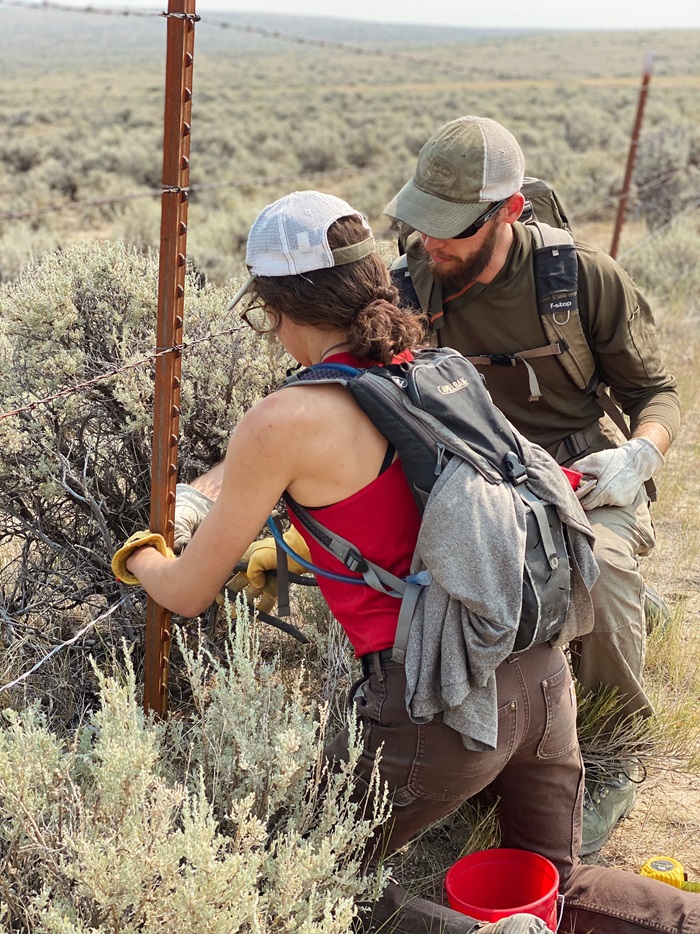
On July 24th & 25th, Artemis Sportswomen joined the National Wildlife Federation’s long-running project to modify existing fencing. Artemis, along with several other organizations and businesses, including Fresh Tracks, Stone Glacier, Montana Wildlife Federation, Montana Fish Wildlife & Parks, The University of Montana, The Wild Rockies Field Institute, Montana Backcountry Hunters and Anglers, 2% for Conservation, and others completed 5 miles of fence modification summer. The total goal of the project is to improve at least 16 miles of fencing by the spring of 2024.
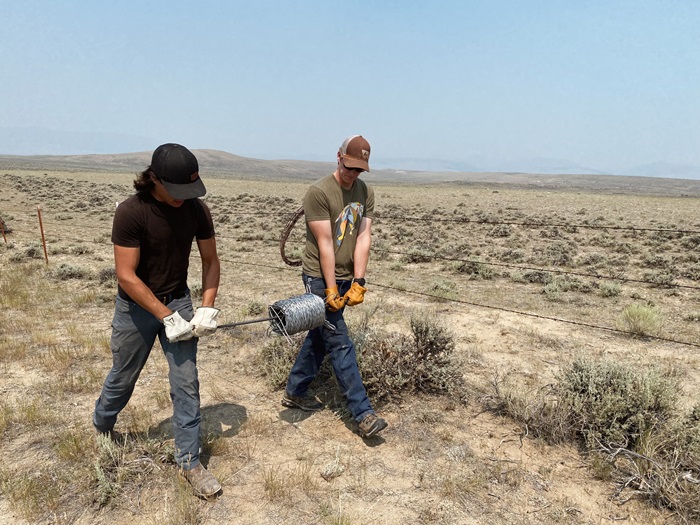
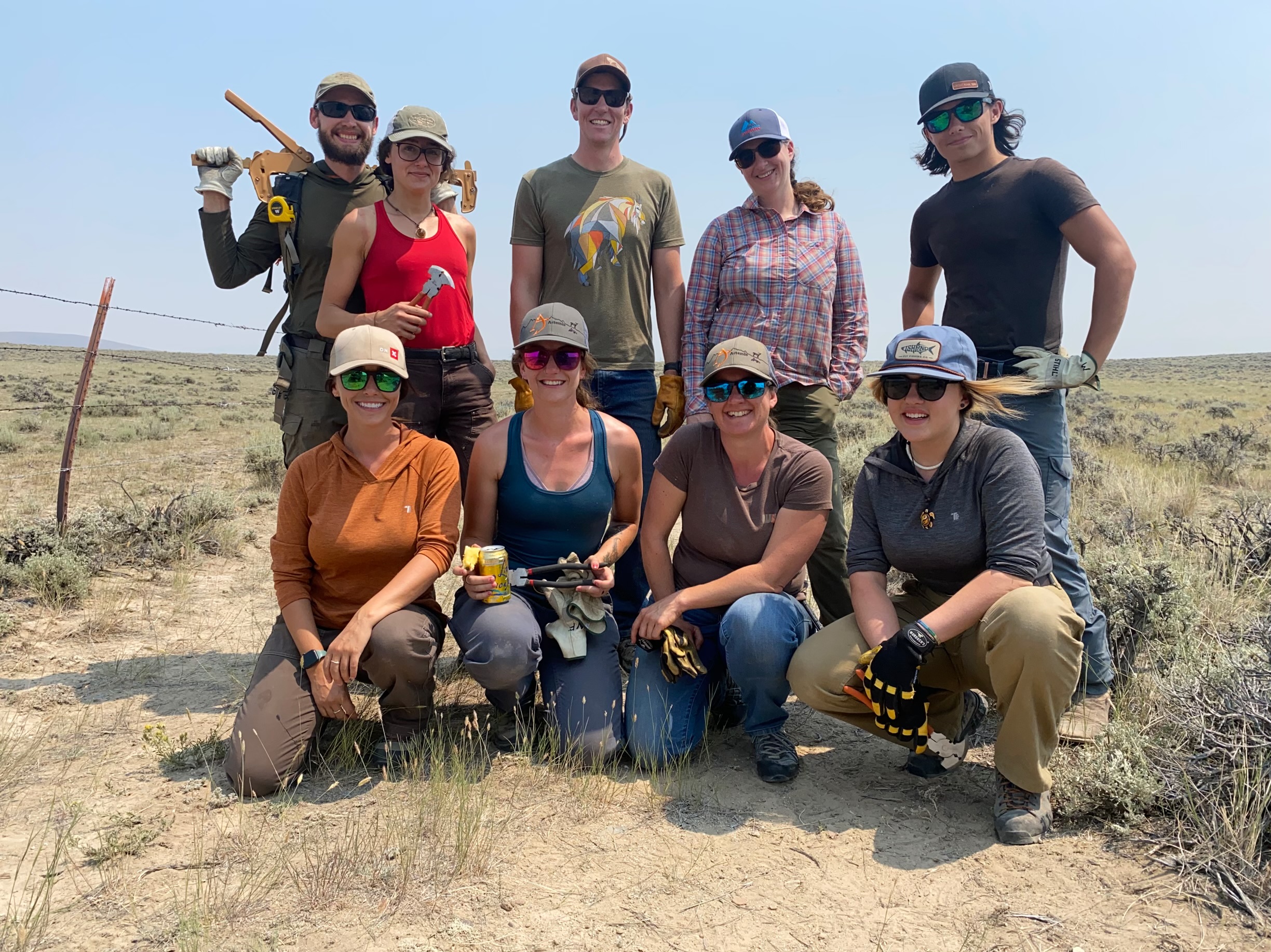
In just two days, the Artemis Sportswomen team of 9 people modified nearly 1 mile of fence to be wildlife-friendly by removing the bottom strand of barbed wire and restringing the stretch with straight wire. This will allow for a more unrestricted movement path for wildlife while still successfully containing livestock.
The impact is immediate and direct. It isn’t just a donation to a cause or a membership in support. This was nine people who came together to pay a conservation debt with sweat. Just a few people and a few hours make a huge and direct impact for the wildlife we all hold so dear.
Whatever your connection and contribution to conservation may currently be, I implore you to support and take part in at least one workday a year. Get your hands dirty. Do the work that so few are willing to do. Our wildlife, wild spaces, and your connection to the land around you will be better for it.
Rachelle Schrute was born and raised in Montana. After a decade or so removal from the hunting world, she wears the off-beat label of a hybrid “raised-doing-it/adult-onset” hunter. As the mother of two teenagers, her drive to keep the freezer full of healthy, humanely harvested meals pushed her back into it. Having the skills and ability to provide for her family gives her a true sense of accomplishment, security, and connection to her surroundings and more importantly, to her food. You can follow her hunting adventures on Instagram, her handle is @rachelle_schrute