The Gift of Conservation
Family and fishing fuels the Bass Pro Shops founder’s passion for conservation — and his current focus on the Recovering America’s Wildlife Act.
- Kelly Bostian for the CCOF
- Dec 15, 2021
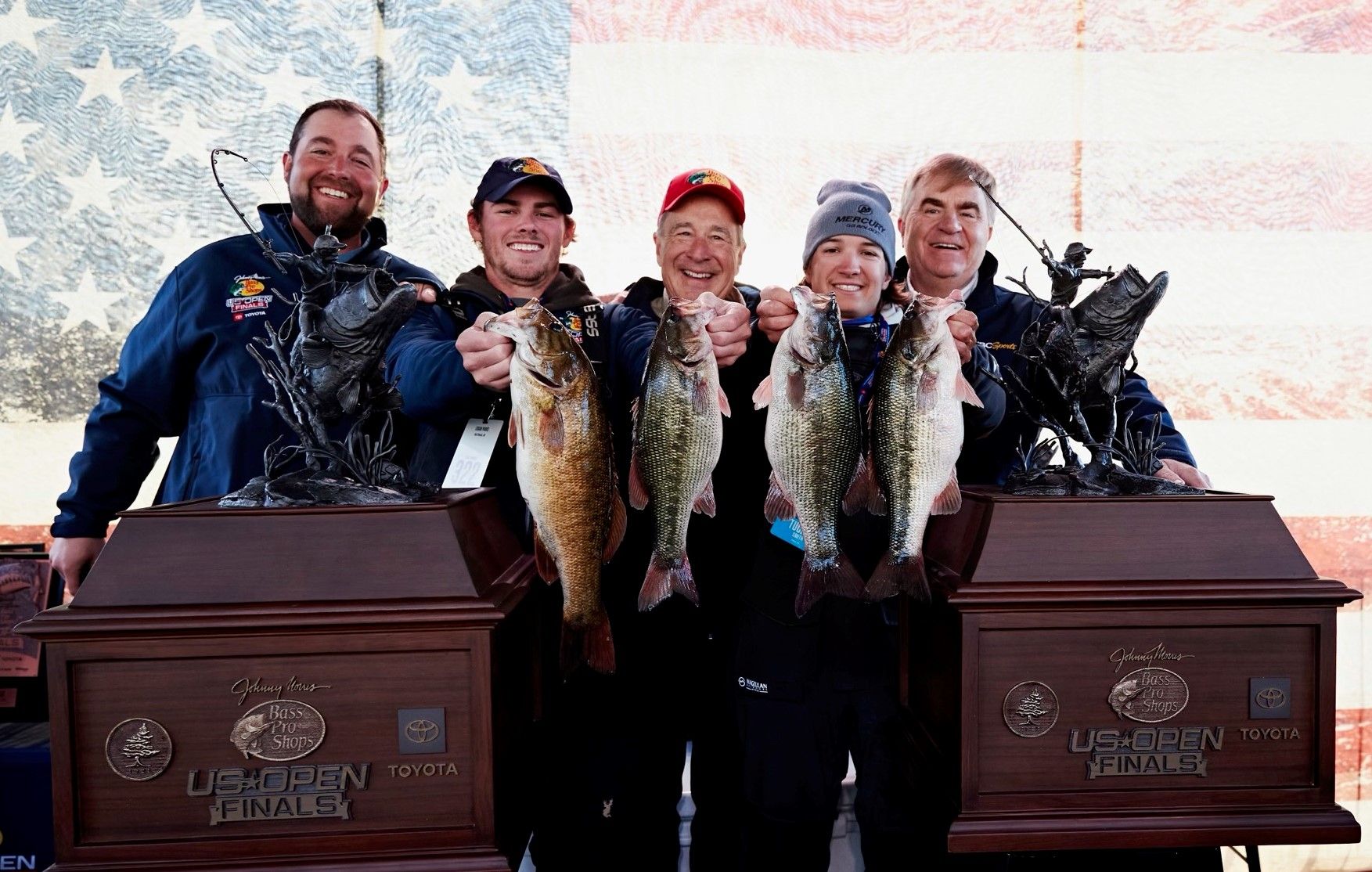
RIDGEDALE, Mo. - For three days in late November, in the scenic southwestern Missouri Ozarks, Johnny Morris reveled in the joys of a life influenced by the clear waters of Table Rock Lake.
The occasion was the CEO and founder of Bass Pro Shops’ new amateur bass fishing championship, which made headlines for its unprecedented prize package. But wildlife were the real winner as the proceeds were directed to conservation efforts nationwide.
At the event, the 73-year-old entrepreneur enthusiastically greeted fans and signed autographs alongside his longtime friends, professional anglers, and television personalities Bill Dance, Roland Martin, Jimmy Houston, and Kevin VanDam.

Morris took time out of this whirlwind weekend to sit down with a reporter to explain his passion for fishing, for conservation, and a piece of legislation now in front of Congress called the Recovering America’s Wildlife Act.
A focus on fish -- and on partnerships
At his iconic Big Cedar Lodge, overlooking the lake, Morris sat near the end of a long wooden table in a headquarters boardroom with a glint in his eye.
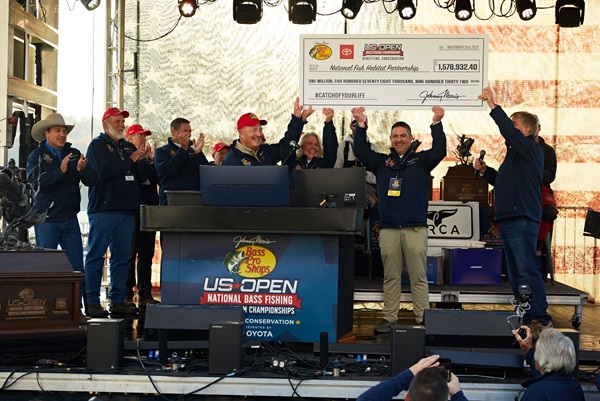
“We’re going to present a check tomorrow for about $1.6 million to the National Fish Habitat Partnership,” he said. “I just found out the total yesterday.”
Bass Pro Shops and Toyota matched the entry fees resulting in the largest donation ever—by far—for the partnership, which has been around for years but was recognized by Congress with the passage of the America’s Conservation Enhancement Act in 2020.
Ryan Roberts, who manages the partnership under the Association of Fish & Wildlife Agencies, said the donation would make a real difference. “We will be able to fund four, maybe five really large-impact projects.”
Most hunters and anglers know that their hunting and fishing licenses support their state conservation agencies. Fewer understand how federal excise taxes on firearms, ammunition and fishing purchases are used to support fisheries and wildlife projects, Morris said.
He recognized long ago how funding through those excise taxes could be used creatively, and multiplied, through public-private partnerships, he said.
“Years ago I was invited by President Ronald Reagan to take an appointment with the National Fish and Wildlife Foundation and that was really eye-opening to me,” he said. “Their charter is to raise two dollars of private money to match every dollar of taxes spent. To me, that is a beautiful model.”
Collaborative conservation
It is a model he has continually encouraged, for example, by supporting a non-profit called Friends of Reservoirs that works to mobilize private citizens to take active roles in restoration efforts, and to help raise funds for restoration work.
Roberts said Morris had a rare talent for uniting sometimes diverse interests like the flood-management-focused U.S. Army Corps of Engineers and fishing community groups.
Morris displayed this again when he co-chaired a commission on improving the management of saltwater recreational fisheries with Scott Deal of Maverick Boat Company.
“If you look at that report issued in 2014 almost all those recommendations are in place today,” said Bob Ziehmer, former director of the Missouri Department of Conservation and now senior director of conservation for Bass Pro Shops. “It laid the groundwork for saltwater recreational anglers to have a seat at the management table.”
Next on the table is the Recovering America’s Wildlife Act, a bill that Collin O’Mara of the National Wildlife Federation calls “most significant wildlife legislation in half a century” in part because it is “a solution that matches the magnitude of the wildlife crisis” — pointing to research that as many as one third of North American wildlife species are facing challenges.
Morris was a co-chair of the Blue Ribbon Panel on Sustaining America’s Diverse Fish and Wildlife Resources, which included representatives of conservation, sporting, energy, and business interests who wrestled with the issue of how to fund conservation for at-risk wildlife.
The panel ultimately put out a document stating that “our nation is facing a conservation crisis,” and recommending that Congress allocate $1.3 billion to state wildlife agencies to take action on the “thousands of species of birds, mammals, fish, frogs, turtles and insects” in danger of slipping through the cracks.
Today, legislation based on this concept has strong bipartisan support in both the House and Senate. More than 1,700 groups nationwide have voiced support for the bill — including dozens of outdoors groups of all stripes.
Morris said, “We have to find medicine to, No. 1, prevent critters from needing to be listed and, No. 2, find a way to prevent money that sportsmen and women are paying from being depleted because there is so much burden on states to look after endangered species. That price tag was identified and it was about $1.3 billion.”
History ties it together
Among large black-and-white photographs on the boardroom wall, Morris pointed to one he said illustrates his lifelong passion for conservation.
The photo shows a man and a woman kneeling next to a gun dog. A few quail lay across the woman’s leg. The 1948 photo is of his parents, John A. and Genny Morris, and the original was a Christmas gift from his father, he said.
“It had a note with it. ‘Johnny these are four of the great joys in my life,’ and it said ‘your mom, Genny, my favorite bird dog, you three months from touchdown and a handful of feathers that made our day,’” he said.
His parents settled in the Springfield, Missouri area in 1911 when white-tailed deer were scarce and wild turkeys were few. His parents embraced Conservation Department efforts, so from a young age he had an appreciation for the department’s work.
“When you talk about Johnny and you talk about Bass Pro Shops, conservation is core and the passion runs all the way to the center, family values, and love of the outdoors, that outdoor heritage,” Ziehmer said.
“There aren’t many out there on his level that really think about the outdoors and the environment and the importance of making it better for the next generation,” he said.
A positive outlook
Looking forward, Morris said he thinks chances for the Recovering America’s Wildlife Act to pass look good, and he sees renewed interest in wildlife conservation in the future. “The situation with Covid was sad, but it was a reset that got a lot of people back outdoors again. I’m encouraged by people’s passion for the outdoors.” If one thing might need a boost it is better communication among diverse groups and an understanding of how projects come together, he said.
“To achieve meaningful things in conservation it takes people reaching out to each other,” he said. “Communication is a challenge. The states can’t do it alone and the feds can’t always just mandate things. When you look at most of the great success stories it comes about when people are reaching out to each other and finding common-sense solutions.”
Kelly Bostian is an independent journalist writing for The Conservation Coalition of Oklahoma Foundation, a 501c3 non-profit dedicated to education and outreach on conservation issues facing Oklahomans.